

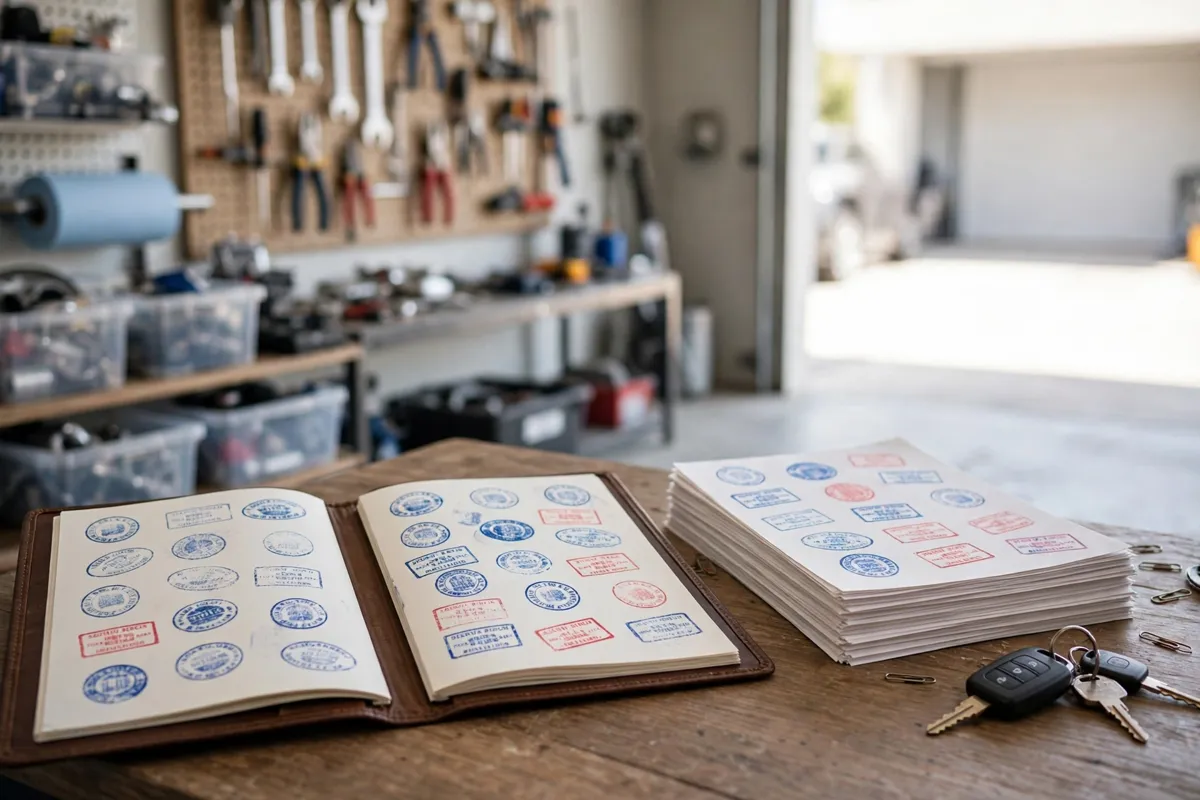
When you buy a used car, the service history tells you more about it than the mileage alone. A complete service history shows the car was maintained on schedule, by garages that recorded their work — and that matters for reliability, safety and resale value. This guide explains what a vehicle service history is, what a digital service record contains, how to read a service book, and what to do when records are missing.
A service history is simply the documented record of maintenance a car has received: oil changes, filter replacements, brake work, coolant and spark plug changes, inspections and repairs. Together with what a car service includes and how often servicing is due, it forms the maintenance story of the vehicle.
What Is a Vehicle Service History?
A vehicle service history is the collection of maintenance records for a car over its life. Traditionally it lived in a paper service book, stamped by the garage at each visit. Today, many manufacturers also keep a digital service record — an online log tied to the car’s registration or VIN — which the owner or a dealer can access and update.
Each entry normally records the date, mileage, type of service (interim, full or major), work carried out, parts fitted, and the garage that did it. Some records also note advisories: items that were not urgent but worth watching, such as tyres nearing their limit or brakes with reduced life remaining. A full service history means the car was serviced at the manufacturer’s recommended intervals without long gaps; a partial history means some services are missing or undocumented.
Service Book vs Digital Service Record
Paper service books are still common on older cars. They are easy to read at a glance, but they can be lost, damaged, or — in rare cases — falsified. If you are buying a car with a paper book, check that stamps look consistent, that mileage rises steadily between entries, and that the garage names are real businesses.
A digital service record is harder to lose and easier to verify, since it is held by the manufacturer or dealer network. Ask the seller or dealer to show you the digital record, and compare it with any paper book. Where the two disagree, trust the digital record and ask questions. Some brands let owners view their own digital history online; others require a dealer to print it. Either way, a car with a verifiable digital record is easier to sell than one with only a paper book.
Maintenance Records and Manufacturer History
Manufacturer history means the car was serviced within the franchised dealer network, following the manufacturer’s schedule. This matters most for newer cars, where warranty cover often depends on it, and for prestige models, where buyers expect dealer stamps. Independent garage history is perfectly acceptable too, provided the work followed the manufacturer’s schedule and used appropriate parts — what matters is that the work was done and recorded, not only who did it.
When reviewing maintenance records, look for patterns, not just stamps. Regular oil changes at the right intervals suggest careful ownership. Repeated repairs to the same system may hint at an underlying problem. And gaps of two or more years, or sudden mileage jumps, deserve an explanation. A full car service record should show the full range of checks, not just an oil change repeated annually.
Service Intervals and Ownership Records
Service intervals are set by the manufacturer — usually every 12 months or a set mileage, whichever comes first. Some cars use variable intervals based on driving conditions, with the dashboard indicating when a service is due. Following the interval matters more than the exact garage: oil degrades with time as well as mileage, and filters, fluids and belts age even on low-mileage cars.
Ownership records go beyond servicing. Keep invoices for tyres, brakes, batteries and repairs alongside the service history, and keep the car’s documentation together: V5C, MOT certificates, and any warranty paperwork. When you sell, a thick, organised folder inspires confidence and often a better price. Buyers pay for certainty, and complete ownership records are the cheapest way to provide it.
Vehicle Documentation Checks Before You Buy
Before buying any used car, cross-check the service history against other documents. The MOT history (free to check online in the UK) shows mileage at each test and any advisories — compare it with service mileage for consistency. A vehicle inspection by an independent mechanic is money well spent on any car without a full history, and a combined MOT and service booking can bring a new purchase up to date in one visit.
Red flags include: a service book with no stamps at all, mileage that goes backwards between records, a seller who cannot name the servicing garage, or a “full service history” claim with only one or two recent invoices. None of these automatically means a bad car, but each one should reduce the price or prompt a deeper check.
What If Service History Is Missing?
Missing history is common on older, cheaper cars, and it is not always a deal-breaker. If the car is otherwise sound, priced accordingly, and passes an inspection, it can still be good value. What you should do is start a fresh record from the day you buy it: get a full service immediately, keep every invoice, and build the history yourself.
For newer or more expensive cars, missing history is a stronger reason to walk away or negotiate hard. A main dealer can sometimes reconstruct a digital record from the registration, so ask before assuming it is lost forever. And when you own the car, protect its history: photograph paper stamps, save digital records, and consider a car service plan or a regular booking with a garage you trust, such as a reputable local auto garage, so the record stays continuous.
Building a Service History You Can Be Proud Of
The best service history is boring: regular entries, on time, every year, with no drama. Set a reminder for the annual service, keep the car with one garage where possible so the record is continuous, and file every invoice the same week. When the time comes to sell, that unbroken record is one of the strongest selling points a used car can have — proof, in black and white, that the car was looked after.
