

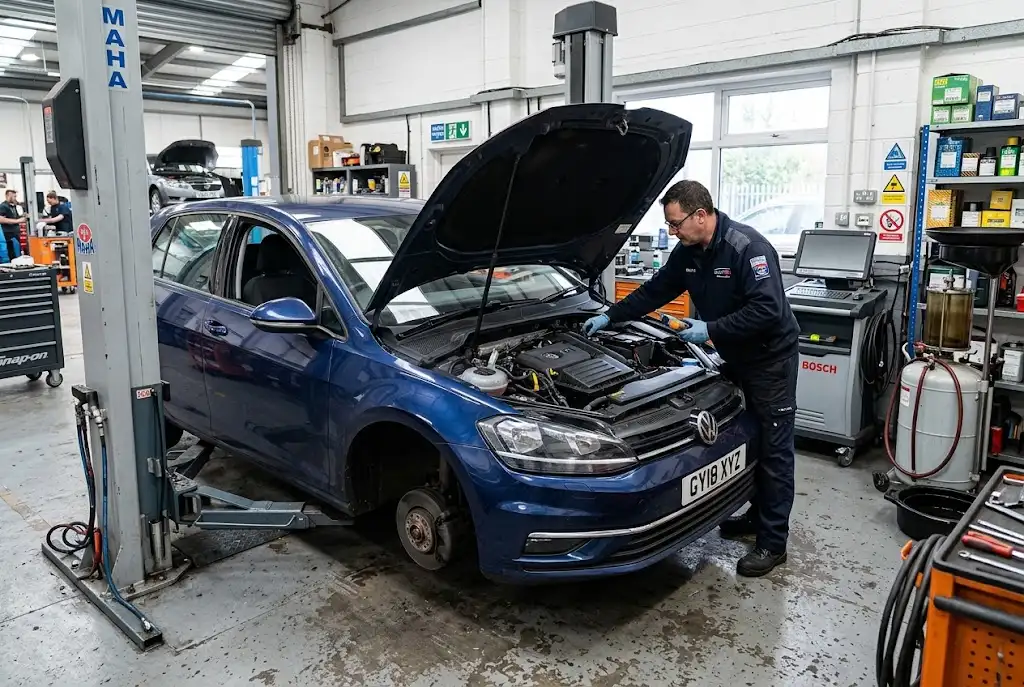
A full car service is one of the most comprehensive routine servicing options available to UK motorists. It is designed to provide a broader inspection and maintenance check than an interim service, helping identify wear, maintenance requirements and potential problems that may otherwise go unnoticed. However, a full service is not necessarily the same as a manufacturer’s service, and the exact checks can vary between vehicles and garages.
Understanding the different types of car servicing makes it easier to choose the right option for your vehicle. This guide explains what an interim service is, what a full service usually includes, when a major service may be required and why following the manufacturer’s servicing schedule remains important.
What Is a Full Car Service?
A full car service is a comprehensive routine maintenance appointment covering a wide range of checks and servicing tasks. It generally goes further than an interim service and is intended to provide a detailed assessment of the vehicle’s condition.
The precise contents depend on the garage, vehicle and manufacturer’s requirements. A typical full service may include an engine oil and filter change, fluid checks, inspections of brakes, tyres, steering, suspension, lights, exhaust and other important components.
Some garages also include diagnostic checks as part of their full service package. Therefore, motorists should always ask for a detailed list of inclusions before booking.
What Is an Interim Service?
An interim service is a shorter and generally less comprehensive servicing option intended to provide essential checks between fuller services. It can be particularly relevant to motorists who cover higher annual mileage or whose manufacturer’s schedule calls for more frequent maintenance.
An interim service commonly includes checks of important systems alongside routine maintenance such as an engine oil and oil filter change. However, the exact package varies.
For example, some servicing providers use an interval of around six months or 6,000 miles for interim servicing, while a full service may be around 12 months or 12,000 miles. These figures are general servicing patterns rather than universal requirements, so your vehicle manufacturer’s schedule should take priority.
What Is an Interim Service Best For?
An interim service can be useful when a vehicle needs additional maintenance between full services. This may be particularly relevant for cars that cover substantial mileage or are used heavily.
It should not, however, be treated as a substitute for maintenance items that are specifically due under the manufacturer’s servicing schedule.
What Does a Full Car Service Include?
The exact checklist varies, but a full service generally covers more areas than an interim service. A professional garage may inspect or maintain several of the following:
- Engine oil and oil filter
- Air filter and other relevant filters
- Coolant and other essential fluid levels
- Braking system
- Steering and suspension components
- Tyres and wheels
- Battery and charging system
- Lights and electrical systems
- Windscreen wipers and washers
- Exhaust system
- Seatbelts and other safety features
- Selected mechanical components
Depending on the provider and vehicle, a full service may also include a diagnostic scan or road test. Current servicing guidance from the RAC describes full servicing as a comprehensive package covering areas such as oil and filters, brakes, tyres, lights, exhaust, suspension, steering, battery and safety features.
Full Service vs Interim Service
The main difference between a full and interim service is the scope of maintenance and inspection. An interim service focuses on essential checks and maintenance between fuller servicing appointments, while a full service generally covers a broader range of vehicle systems.
Neither option should automatically be considered better for every car. The appropriate service depends on your vehicle’s maintenance schedule, mileage, age, usage and current condition.
Interim Service
- Generally less comprehensive
- Designed to sit between fuller services
- Useful for vehicles with higher mileage or more frequent servicing requirements
- Usually includes essential checks and routine maintenance
Full Service
- More comprehensive inspection
- Broader range of mechanical and safety checks
- Typically includes oil and filter maintenance
- May include additional diagnostic or inspection work
- Often used as the main annual servicing appointment
For motorists who are unsure which option is appropriate, the vehicle’s service schedule should be the starting point rather than the price or name of a garage package.
What Is a Major Service?
A major service is generally a more extensive maintenance appointment than a standard full service. It can include additional replacement items and checks that are required at longer intervals.
The term “major service” is not necessarily used in exactly the same way by every garage. One provider may include certain replacement parts in its major package while another may follow a different checklist. Consequently, motorists should always ask what the garage means by a major service and compare its checklist with the manufacturer’s requirements.
Major servicing can become particularly important as a vehicle accumulates mileage because some components have maintenance or replacement intervals that occur less frequently than routine oil and filter changes.
What Does a Major Service Include?
There is no universal major-service checklist for every make and model. The work should be based on the vehicle’s servicing requirements.
Depending on the car, a major service may involve additional maintenance relating to filters, spark plugs, fluids, belts or other components. Some items are time- or mileage-sensitive and therefore need to be replaced at specific points rather than during every routine service.
This is one reason why manufacturer servicing information is so important. A generic full or major service package may not automatically include every maintenance item required for a particular vehicle.
Understanding Manufacturer Servicing
Manufacturer servicing follows the maintenance requirements specified for a particular make and model. It can include scheduled checks and replacement items that are specific to the vehicle.
Your owner’s manual, service booklet or manufacturer’s digital service information should indicate the relevant intervals and maintenance requirements. Some vehicles also use onboard service indicators to help drivers identify when scheduled maintenance is due.
Following the manufacturer’s schedule is particularly important where a vehicle is covered by a warranty or manufacturer-supported maintenance programme. The servicing requirements should be checked against the applicable warranty terms rather than assuming that any generic garage service will satisfy every requirement.
Understanding Servicing Intervals
Servicing intervals vary between vehicles. They can be based on mileage, elapsed time or a combination of both. Driving conditions and vehicle use may also influence the appropriate maintenance approach.
Many UK motorists encounter general guidance suggesting a full service every 12 months or 12,000 miles, whichever comes first. However, this should not be treated as a universal rule. Current servicing guidance also emphasises checking the manufacturer’s schedule because different vehicles have different requirements.
If your vehicle’s dashboard indicates that a service is due, or your maintenance records show that you have reached a scheduled interval, it is sensible to check the manufacturer’s information before booking.
How Mileage Affects Car Servicing
Mileage is an important factor because some components experience more wear as a vehicle is driven. A car that travels long distances regularly may require more frequent attention than one used occasionally for short journeys.
High-mileage drivers may therefore benefit from additional interim maintenance between full services if this matches the vehicle’s servicing requirements. On the other hand, low annual mileage does not necessarily mean servicing can simply be ignored because some maintenance items are time-dependent.
The safest approach is to consider both mileage and time when reviewing your servicing schedule.
When Should You Book a Full Car Service?
A full service should generally be booked when it is due according to the vehicle’s recommended servicing schedule. For many vehicles, this may be approximately once a year, but the actual interval can differ significantly between manufacturers and models.
You may also want to arrange professional inspection sooner if you notice:
- Unusual engine or mechanical noises
- Changes in braking performance
- Steering or suspension problems
- Dashboard warning lights
- Fluid leaks
- Difficulty starting the vehicle
- Unusual vibrations
- Changes in fuel consumption or vehicle performance
A scheduled service is not intended to replace prompt investigation of a developing fault. If something feels different when driving, contact a suitably qualified garage rather than waiting for the next planned service.
Full Car Service and MOT: Are They the Same?
A full service and an MOT serve different purposes. An MOT is a regulated test that checks specific aspects of a vehicle against legal standards. A service is a maintenance procedure designed to help keep the vehicle in good working condition.
This means passing an MOT does not mean that a vehicle has received a full service. Likewise, completing a full service does not remove the requirement for an MOT when the vehicle is legally due for one.
If you want to understand the distinction before booking either appointment, our guide to MOT and service explains the differences between the two.
How Much Does a Full Car Service Cost?
The cost of a full service depends on several factors, including the vehicle’s make and model, engine type, mileage, garage labour rates and the parts or fluids required.
A full service will generally cost more than an interim service because it covers a wider range of checks and maintenance. A major service can cost more again if additional scheduled replacement items are due.
For a detailed explanation of service pricing and the factors that affect it, see our guide to car service cost.
How to Choose the Right Service Package
Before booking, do not rely solely on labels such as “full”, “major” or “interim”. Ask the garage for the actual checklist.
A useful comparison should consider:
- The manufacturer’s recommended service requirements
- The vehicle’s current mileage
- Time since the previous service
- What was included in the previous service
- Which filters and fluids are due for replacement
- Whether any scheduled maintenance items are approaching their interval
- Whether diagnostic checks are included
- Whether additional repairs require your approval
This approach helps you avoid paying for a package that does not meet your vehicle’s actual maintenance requirements.
Keeping Track of Your Servicing History
Maintaining a clear service history makes it easier to determine what work has already been completed. Keep invoices, receipts and service documentation in a safe place and record the date and mileage of each service.
When buying a used vehicle, the available service history can also help you understand how consistently the car has been maintained. If important records are missing, a professional inspection may help establish the vehicle’s current condition.
Why Manufacturer Servicing Should Not Be Ignored
Generic service packages can be useful, but they should not replace manufacturer-specific requirements. Some maintenance items may only need attention at particular mileage or time intervals.
For example, a routine full service may cover oil, filters and general inspections, while the manufacturer’s schedule may specify an additional maintenance task at a particular mileage. Missing that item simply because the vehicle has received a generic service can leave an important part of the maintenance schedule incomplete.
Current servicing guidance similarly recommends following the manufacturer’s schedule because certain maintenance items can be time-critical.
Full Car Service Checklist for UK Drivers
Before booking, use this simple checklist:
- Check when the vehicle’s next service is due.
- Review the manufacturer’s recommended maintenance schedule.
- Check the vehicle’s current mileage.
- Find out what was included in the previous service.
- Ask the garage for a written list of included checks.
- Confirm whether parts and fluids are included in the price.
- Ask whether manufacturer-specific maintenance is due.
- Keep the completed service documentation.
This preparation can make the booking process clearer and help you compare service providers more effectively.
Final Thoughts
A full car service provides a comprehensive approach to routine vehicle maintenance, but it should always be considered alongside the manufacturer’s servicing requirements. An interim service may be suitable between full services, while a major or manufacturer service may be necessary when additional scheduled maintenance becomes due.
The key is not simply choosing the most expensive service package. Instead, check your vehicle’s schedule, mileage, age and maintenance history, then confirm that the garage’s proposed work matches those requirements.
Understanding the difference between interim, full, major and manufacturer servicing can help UK motorists make better maintenance decisions and avoid overlooking important scheduled work.
For further guidance on vehicle maintenance and servicing, see our broader auto services guide.
For official government information relating to vehicle roadworthiness requirements, motorists can also consult the GOV.UK guidance on maintaining roadworthiness.
