

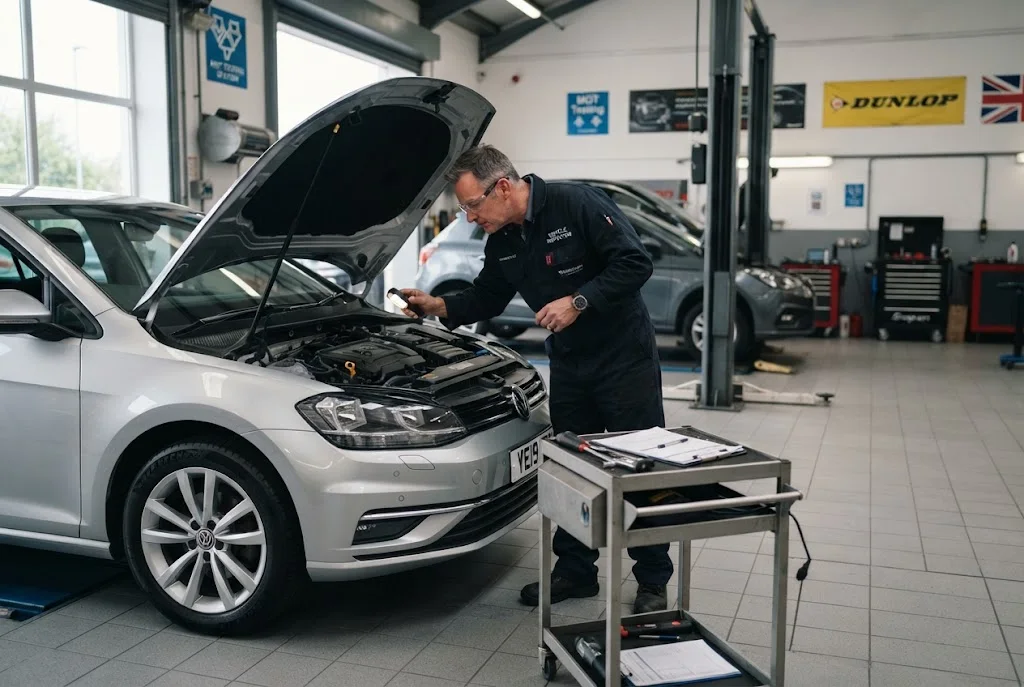
A vehicle inspection can give a prospective buyer a clearer picture of a used car’s condition before committing to a purchase. A vehicle may look excellent in photographs and appear to drive well during a short test drive, yet still have mechanical, structural or maintenance issues that are difficult for an ordinary buyer to identify.
A professional inspection works alongside a vehicle history check and the seller’s documentation. Together, these checks can help you understand the car’s condition, previous use and potential future repair costs. This guide explains pre-purchase inspections, AA and RAC inspection services, service history, vehicle history checks and what to expect from an inspection report.
What Is a Vehicle Inspection?
A vehicle inspection is a professional assessment of a car or other vehicle to identify its general mechanical, structural and physical condition. The exact checks depend on the inspection provider and package selected.
An inspection may look at areas such as the bodywork, engine compartment, brakes, steering, suspension, wheels, tyres, electrical systems and interior. Some inspection packages also include a road test, diagnostic checks, photographs and a written report.
The purpose is not necessarily to guarantee that a vehicle will never develop a fault. Instead, an inspection provides additional information about its condition at the time it is examined.
The AA describes its vehicle inspection as a pre-purchase assessment that can identify potential problems and help buyers understand the condition of a used vehicle.
Why Is a Pre-Purchase Vehicle Inspection Important?
A pre-purchase inspection can be particularly valuable when buying a used vehicle because the buyer is making a decision based on limited information. A seller may provide photographs, a description and a service history, but these do not necessarily reveal every mechanical or structural issue.
An independent inspection can identify issues that may not be obvious during a normal viewing. Depending on the inspection, this could include evidence of previous repairs, corrosion, worn components, tyre problems, fluid leaks or warning lights.
If significant problems are discovered, you can use the findings when deciding whether to continue with the purchase. You may choose to negotiate the price, ask the seller to address a problem or walk away from the vehicle altogether.
This can be especially useful when buying privately, purchasing an older vehicle or considering a car that appears unusually cheap.
What Does a Vehicle Inspection Check?
There is no universal inspection checklist covering every provider. The scope depends on the package, vehicle and company carrying out the assessment.
Common areas can include:
- Bodywork and exterior condition
- Evidence of previous repairs
- Engine compartment
- Steering and suspension
- Brakes
- Wheels and tyres
- Exhaust system
- Electrical controls
- Interior and equipment
- Fluid leaks and levels
- Warning lights
- Road performance and handling
The RAC’s published inspection checklist includes areas such as body exterior, engine compartment, suspension, wheels and tyres, exhaust, fuel system, brakes and a road test.
More detailed packages can add additional mechanical checks, diagnostics, photographs or longer road tests. Therefore, it is important to compare what is actually included rather than choosing an inspection based only on its name.
AA Car Inspection Explained
An AA car inspection is one option available to UK buyers who want a professional assessment before purchasing a used vehicle. The AA currently offers different inspection levels, with its published information showing basic, comprehensive and advanced options.
The AA says its inspections can cover standard cars, hybrid and electric vehicles, vans, motorhomes, SUVs and 4x4s, although eligibility and the checks included vary by inspection type.
Its inspection options range from a basic assessment to more extensive checks. Depending on the selected package, the inspection may include areas such as brakes, tyres, under-vehicle components, diagnostics, battery testing and road testing.
Buyers should check the current package details before booking because inspection coverage and pricing can change. The AA also states that the seller’s permission is required for a pre-purchase inspection because the vehicle needs to be made available for examination and, where applicable, a road test.
RAC Inspection Explained
An RAC inspection provides another professional option for buyers considering a used vehicle. RAC currently offers Basic, Comprehensive and Advanced inspection levels, with different depths of mechanical and structural assessment.
The RAC’s Basic inspection includes a mechanical and structural check, underbody inspection and a road test of up to three miles. Its Comprehensive package includes a broader 307-point inspection, interior and bodywork checks, an extended road test and a written engineer report. The Advanced package adds further diagnostic and testing features.
The appropriate level depends on the vehicle and the buyer’s circumstances. A more detailed inspection can make sense when purchasing an expensive used car or a vehicle with an unclear condition, while a simpler inspection may be sufficient for some buyers.
As with any inspection provider, review the current terms and inspection coverage before booking rather than assuming that every package checks every component.
Vehicle Inspection vs Vehicle History Check
A vehicle inspection and a vehicle history check provide different types of information. They should generally be viewed as complementary rather than interchangeable.
An inspection focuses primarily on the vehicle’s physical and mechanical condition at the time it is assessed. A history check focuses on information recorded about the vehicle and its past.
A history check can potentially identify issues such as outstanding finance, theft records, insurance write-offs, mileage discrepancies and other historical information, depending on the service used.
For example, RAC’s vehicle history check information includes checks relating to outstanding finance, stolen or written-off vehicles, mileage, plate changes and import or export records.
Neither type of check should automatically replace the other. A car can have a clean-looking history and still have a mechanical fault, while a mechanically sound vehicle can still have important historical information that a physical inspection cannot reveal.
Why Service History Matters
Service history provides evidence of how a vehicle has been maintained over time. It can include records of scheduled servicing, repairs, replacement parts and other maintenance work.
A complete and consistent service history can help a buyer understand what maintenance has already been carried out. It may also reveal patterns that deserve further investigation, such as repeated repairs to the same component.
However, service history should be considered alongside the vehicle’s current condition. A car can have a well-documented history and still require repairs because components naturally wear over time.
When reviewing records, compare the mileage and dates with the vehicle’s current odometer reading and other available documentation. Inconsistencies do not automatically prove wrongdoing, but they are a reason to ask further questions before buying.
How to Check a Vehicle’s MOT History
The UK’s official MOT history service is another useful part of the research process. GOV.UK allows buyers to view previous MOT results, recorded mileage and, for vehicles tested in England, Scotland or Wales, details of where tests were carried out and what parts failed or had minor problems.
You can also check whether an MOT certificate is currently valid and when the next MOT is due through GOV.UK.
MOT history is valuable, but it should not be treated as a complete mechanical inspection. An MOT assesses specific legal and safety requirements at the time of the test. It does not provide the same information as a comprehensive pre-purchase inspection.
What Is an Inspection Report?
An inspection report records the findings from the professional assessment. The format depends on the provider and inspection package.
A report may identify areas that were checked, describe faults or concerns and indicate whether further investigation or repair may be appropriate. More comprehensive services may include photographs, diagnostic information or a summary from the inspecting engineer.
The report can then be used as part of the buying decision. If a fault is identified, consider how serious it is, whether it affects safety or reliability, and what it could cost to address.
Do not assume that every item mentioned in a report requires immediate replacement. Some findings may relate to wear or recommendations rather than confirmed failures. If you do not understand a technical point, ask the inspection provider or another qualified professional for clarification.
What Should You Ask Before Booking an Inspection?
Before paying for an inspection, ask a few practical questions about the service.
- What inspection level is being provided?
- Which components and systems are included?
- Is a road test included?
- Will the underside of the vehicle be inspected?
- Are diagnostics included?
- Will photographs be provided?
- How will the report be delivered?
- Does the vehicle meet the provider’s eligibility requirements?
- Does the seller need to give permission?
- How long will the inspection take?
These questions can prevent confusion and make it easier to compare inspection providers on a like-for-like basis.
When Is a Vehicle Inspection Most Useful?
Although any used-car buyer may benefit from an inspection, certain situations make one particularly valuable.
Buying Privately
Private sales can offer attractive prices, but buyers may have less information and fewer protections than when purchasing from an established dealer. An independent inspection can provide an additional layer of information before money changes hands.
Buying an Older Car
Age and mileage can increase the likelihood that components will have experienced wear. A professional assessment can help identify areas that may require attention.
Buying a High-Value Used Vehicle
The higher the purchase price, the more significant a previously hidden fault could be financially. Spending money on a detailed inspection may therefore be worthwhile before making a substantial commitment.
Buying a Car With Limited History
If service records are incomplete or the vehicle’s history is unclear, combining a history check with a professional inspection can provide a more complete picture.
Can an Inspection Help With Price Negotiation?
Yes, the findings can provide useful evidence when discussing the purchase price. If an inspection identifies genuine repair requirements, you can use the estimated implications of those issues when considering whether the seller’s asking price represents good value.
For example, a vehicle may appear competitively priced until an inspection identifies worn tyres, brake issues or other maintenance requirements. These costs can then form part of your overall ownership calculation.
However, negotiation should remain reasonable. Not every minor observation should be treated as a reason for a large price reduction, and some wear is normal for an older vehicle.
What a Vehicle Inspection Cannot Tell You
An inspection provides useful information, but it is not a guarantee that every future problem will be identified. Mechanical components can fail unexpectedly, and some faults may only become apparent under conditions that are not reproduced during an inspection.
The inspection also does not necessarily provide a complete record of the vehicle’s past. That is why it should be combined with documentation, MOT records, service history and an appropriate vehicle history check.
Taking a test drive yourself can also be useful. Pay attention to steering, braking, gearbox operation, warning lights, unusual noises and general driving behaviour while following safe and legal driving practices.
Vehicle Inspection and Overall Used-Car Research
Buying a used car works best when several pieces of information are considered together. Start with the vehicle’s advertised specification and price, then review its service history and MOT record. A vehicle history check can provide additional background information, while a professional inspection can assess its current physical and mechanical condition.
If the vehicle needs tyres or other immediate maintenance, understanding tyre services and likely running costs can help you calculate the true cost of ownership.
Similarly, if an inspection reveals repairs that need to be completed before or shortly after purchase, you can consider your available budget and whether repair finance may be relevant to your circumstances.
For buyers considering a financed vehicle, the purchase price is only one part of the calculation. Monthly repayments, insurance, fuel, maintenance and potential repair costs should all be considered before making a commitment.
Final Thoughts on Vehicle Inspection
A professional vehicle inspection can be a valuable part of buying a used car, particularly when the vehicle’s condition, maintenance history or previous use is uncertain. It provides an independent assessment that can reveal issues which may not be obvious during a casual viewing or short test drive.
AA and RAC inspections offer different levels of professional assessment, while an MOT history check, service history and vehicle history check can provide additional information about the car’s past. Used together, these sources can give buyers a stronger basis for making an informed decision.
Ultimately, an inspection is about reducing uncertainty rather than eliminating every possible risk. The more carefully you assess the vehicle before purchase, the easier it becomes to understand its likely costs, negotiate from an informed position and decide whether it is the right car for you.
