

When a vehicle suddenly stops working, emergency auto repair can become a priority rather than a planned maintenance task. A breakdown may happen because of a flat battery, tyre problem, overheating, electrical fault, mechanical failure or another unexpected issue. Knowing what to do first can help you stay safe and make it easier to arrange the right assistance.
For UK drivers, emergency support can include roadside assistance, a mobile mechanic, recovery to a garage or, where practical, a roadside repair. The right option depends on the nature of the fault, the vehicle’s location and whether it is safe to attempt any further journey.
What Is Emergency Auto Repair?
Emergency auto repair refers to urgent vehicle assistance when an unexpected fault prevents or seriously affects normal driving. Unlike planned servicing, emergency repair begins with an immediate problem that needs assessment or intervention.
Some breakdowns can be resolved at the roadside. A battery-related problem, for example, may require testing and starting assistance, while a minor issue could potentially be repaired by a suitably equipped technician. Other faults cannot safely be fixed at the roadside and require vehicle recovery to a repair workshop.
The priority should always be safety first, followed by accurate diagnosis and an appropriate repair or recovery solution.
What to Do When Your Vehicle Breaks Down
A breakdown can be stressful, particularly when it occurs on a busy road or unfamiliar route. Taking a structured approach can make the situation easier to manage.
Move to a Safe Location If Possible
If the vehicle can still be controlled safely, move it away from moving traffic and stop in the safest practical location. On a motorway, follow the relevant UK road-safety guidance and avoid putting yourself in unnecessary danger.
If the vehicle cannot be moved, switch on the hazard warning lights where possible and remain aware of surrounding traffic. Your exact actions should depend on the location and circumstances of the breakdown.
Assess the Situation
Try to establish what happened immediately before the vehicle stopped. Did a warning light appear? Was there smoke, an unusual smell, overheating, a strange noise or difficulty starting?
This information can help a technician understand the likely problem. However, drivers should avoid attempting complicated repairs on the roadside, particularly in unsafe traffic conditions.
Contact Roadside Assistance
If the vehicle cannot safely continue, roadside assistance can help arrange appropriate support. Depending on the provider and circumstances, this may involve a technician attending the vehicle or arranging recovery to a garage.
When requesting assistance, provide your location, vehicle details and a clear description of the problem. Accurate information can help the service send suitable equipment or determine whether recovery is likely to be necessary.
When a Mobile Mechanic Can Help
A mobile mechanic can be useful when a vehicle requires urgent attention but may not need to be transported immediately to a workshop. Mobile technicians can carry diagnostic equipment and tools to the vehicle, although their capabilities vary.
Common situations that may potentially be assessed by a mobile mechanic include starting problems, battery faults, some electrical issues and certain mechanical problems. Whether the vehicle can actually be repaired at its location depends on the fault, available parts, equipment and working conditions.
A mobile repair is not automatically the best solution for every breakdown. If the vehicle has suffered serious mechanical damage or presents a safety risk, recovery to an appropriate workshop may be more suitable.
Roadside Repairs vs Vehicle Recovery
Roadside repairs and vehicle recovery are related but different services. A roadside repair attempts to resolve the fault where the vehicle has broken down. Recovery transports the vehicle to another location, normally because the problem cannot be safely or practically fixed at the roadside.
For example, a simple fault might be resolved during the initial attendance. A serious engine or transmission problem, however, could require specialist equipment and replacement parts that are unavailable at the roadside.
Drivers should not assume that every emergency call-out will result in an immediate repair. A professional technician first needs to establish whether the vehicle can be made safe and operational.
Common Reasons for Emergency Vehicle Repairs
Unexpected breakdowns can result from many different problems. Some are associated with vehicle age or wear, while others occur suddenly.
- Battery failure: a weak or failed battery can prevent the engine from starting.
- Tyre problems: punctures or damaged tyres can make continued driving unsafe.
- Overheating: cooling-system problems can cause serious engine damage if ignored.
- Electrical faults: charging, starting or wiring problems can cause unexpected failures.
- Brake problems: changes in braking performance require immediate attention.
- Engine faults: serious mechanical or electronic problems may leave the vehicle unable to continue.
- Fuel-related problems: running out of fuel or experiencing a fuel-system issue can result in a breakdown.
- Clutch or transmission problems: sudden difficulty selecting gears or moving the vehicle may require recovery.
These examples demonstrate why accurate repair diagnostics matter. Similar symptoms can have very different causes, so replacing a component without establishing the underlying fault may not solve the problem.
Emergency Diagnostics and Fault Finding
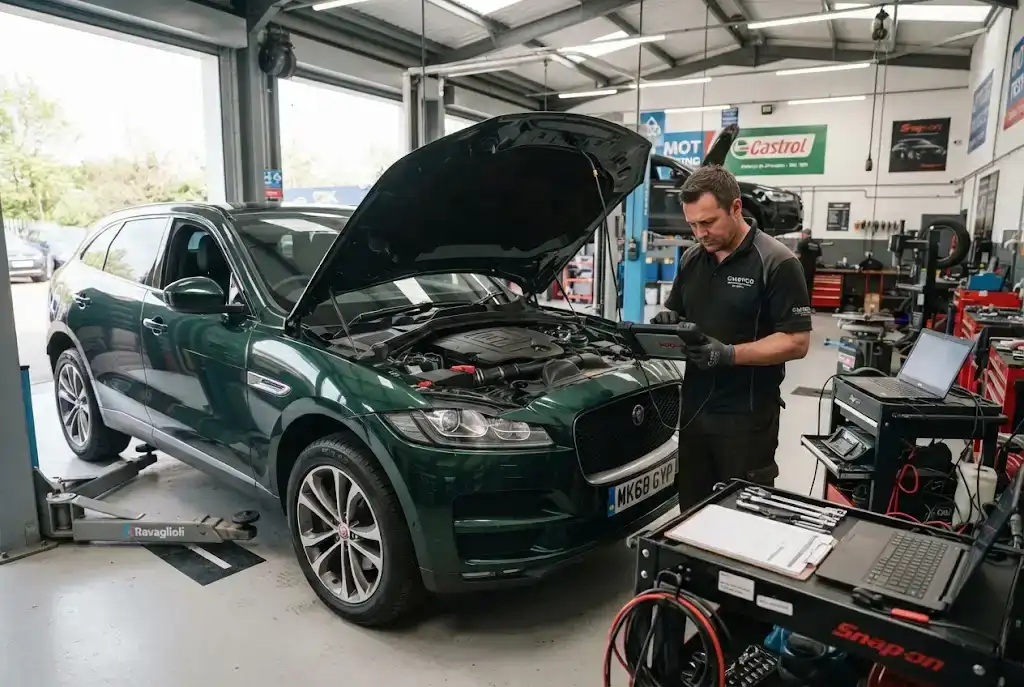
Emergency diagnostics are often the first technical step after a breakdown. A technician may inspect the vehicle, listen for unusual mechanical sounds, check warning indicators and use electronic diagnostic equipment where appropriate.
Modern vehicles contain multiple electronic control systems, so a diagnostic code can provide useful information about where further investigation is needed. However, a stored code does not necessarily mean that the named component itself has failed.
Professional fault finding combines diagnostic information with physical inspection and the symptoms reported by the driver. This approach helps determine whether the issue can be repaired immediately or requires specialist workshop attention.
When You Need a 24-Hour Garage
A 24-hour garage can be particularly useful when a vehicle develops a problem outside normal workshop hours. However, not every garage operates around the clock, and services available overnight can differ significantly.
Before travelling to a garage, confirm that it accepts emergency vehicles at the relevant time and can handle the type of repair required. If the vehicle cannot be driven safely, arranging recovery may be more appropriate than attempting to reach a workshop yourself.
For businesses and drivers who regularly travel long distances, knowing where suitable auto garages and repair workshops are located can also make future breakdown planning easier.
Urgent Vehicle Repairs and Safety
Some problems should be treated as urgent even when the vehicle appears capable of moving. Brake faults, serious steering problems, major fluid leaks, overheating and significant tyre damage can create immediate safety concerns.
Continuing to drive simply because the engine still runs can sometimes make the original problem worse. A vehicle with a serious fault may also become more difficult to control or suffer additional damage.
When in doubt, obtain professional advice before continuing the journey. The safest decision may be to stop driving and arrange assistance.
Emergency Repairs and Preventive Maintenance
Emergency breakdowns cannot always be avoided, but good maintenance can reduce the likelihood of some preventable problems. Regular inspections can identify worn components, deteriorating tyres, weak batteries, fluid issues and other developing faults.
A sensible preventive maintenance routine should complement the manufacturer’s recommended servicing requirements rather than replace them.
Keeping track of the vehicle’s service schedule and maintaining accurate maintenance records can help owners understand what work has already been completed and what may be approaching.
How to Prepare for a Future Breakdown
Preparation can make an unexpected breakdown less stressful. Drivers should know how to access their breakdown or roadside assistance provider and keep essential vehicle information available.
It is also sensible to understand the vehicle manufacturer’s recommendations for basic checks. Regularly checking tyres, lights, fluids and other accessible components can help identify obvious issues before they become emergencies.
Drivers who use service reminders can also reduce the chance of overlooking planned maintenance. Although servicing cannot prevent every breakdown, keeping up with scheduled work provides an important layer of vehicle care.
What Information to Give an Emergency Mechanic
Clear information can make an emergency call-out more efficient. Tell the provider where the vehicle is located and explain what happened immediately before the breakdown.
Useful details can include:
- Vehicle make and model
- Registration details where required
- Exact or identifiable location
- Whether the vehicle can start
- Whether warning lights are displayed
- Any unusual noises, smells or smoke
- Whether the vehicle can move safely
- Any recent repairs or maintenance
If you have a digital service history, relevant information may also help a technician understand previous maintenance or repairs. This can be especially useful where a vehicle has recently undergone work.
Emergency Auto Repair and Service Plans
Emergency repair should not be confused with planned maintenance. Drivers looking for more predictable servicing arrangements may consider car service plans, which can help organise scheduled maintenance depending on the provider and vehicle.
A service plan does not necessarily cover every unexpected breakdown or emergency repair, so owners should check the specific terms before relying on one for breakdown costs.
Similarly, roadside assistance may be a separate service from routine servicing. Understanding what each arrangement covers can prevent confusion when an unexpected fault occurs.
Final Checks After an Emergency Repair
Once an urgent fault has been repaired, the vehicle should be checked before normal driving resumes. The checks required depend on the problem and the work performed.
A technician may need to confirm that the original symptom has disappeared, that relevant warning indicators have been addressed and that repaired components are functioning correctly. If a roadside repair cannot provide sufficient assurance, the vehicle may still need a workshop inspection.
This is particularly important for safety-critical systems such as brakes, steering and tyres. A quick repair should never be treated as a substitute for appropriate testing when the fault requires more extensive investigation.
Conclusion
Emergency auto repair provides an important solution when an unexpected vehicle fault interrupts a journey. Depending on the circumstances, the right response could involve a mobile mechanic, roadside assistance, emergency diagnostics, a roadside repair or recovery to a specialist garage.
The safest approach is to assess the situation carefully, avoid unnecessary roadside risks and obtain professional assistance when the vehicle cannot safely continue. Once the immediate problem has been resolved, returning to a structured maintenance routine can help reduce the likelihood of similar issues in the future.
For UK drivers, understanding the difference between emergency repairs, routine servicing, preventive maintenance and vehicle recovery makes it easier to choose the appropriate service when something goes wrong. Good preparation and timely professional support can turn a stressful breakdown into a more manageable repair process.
