

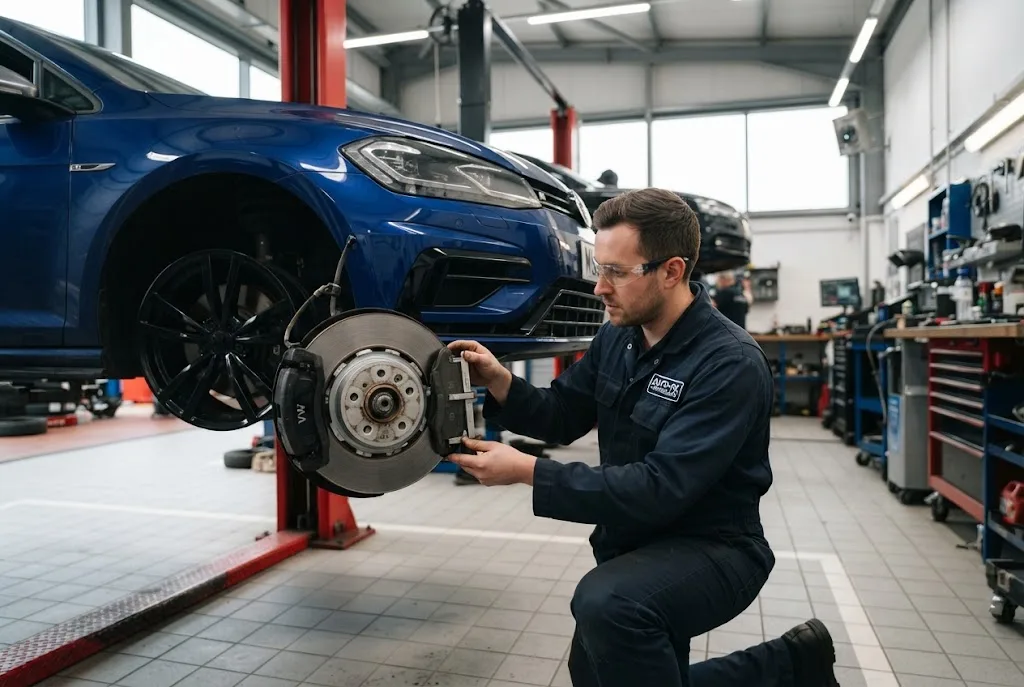
Brake services are essential for keeping a vehicle safe, predictable and roadworthy. Your braking system needs to convert the driver’s input into controlled stopping power every time the brake pedal is pressed. Because components such as brake pads, discs, calipers and brake fluid gradually wear or deteriorate, regular checks can help identify problems before they become more serious.
Understanding how the braking system works also makes it easier to recognise warning signs and choose the right type of maintenance. From routine brake inspection to brake repair, brake pads replacement and brake discs replacement, different services address different parts of the system. This guide explains the main components, common problems, maintenance requirements and factors that can affect brake replacement cost.
What Are Brake Services?
Brake services cover a range of inspections, maintenance and repairs designed to keep a vehicle’s braking system working correctly. The exact work depends on the vehicle, component condition and symptoms reported by the driver.
A typical service may include checking brake pad thickness, examining discs for wear, inspecting calipers, checking brake fluid condition and looking for leaks or other visible problems. A technician may also assess how the vehicle behaves during braking, including unusual noises, vibration or pulling to one side.
Routine brake services are not limited to replacing worn parts. In many cases, an inspection can identify developing problems early and help prevent unnecessary component damage.
How Does a Vehicle Braking System Work?
Most modern cars use a hydraulic braking system. When the driver presses the brake pedal, force is transferred through the hydraulic system to the brakes at the wheels. Brake components then create friction that slows the wheels and, ultimately, the vehicle.
Disc brakes commonly use a brake disc, caliper and brake pads. When the brake pedal is pressed, the caliper pushes the pads against the rotating disc. This friction reduces wheel speed.
Some vehicles may use drum brakes on certain wheels instead of discs. Modern vehicles can also have electronic systems such as anti-lock braking systems (ABS), which help maintain steering control during heavy braking.
When Do You Need Brake Repair?
Brake repair may be necessary when components are worn, damaged or no longer operating correctly. Some problems are obvious, while others may only become noticeable during a professional inspection.
Common warning signs include squealing or grinding noises, a soft or spongy brake pedal, vibration through the steering wheel, longer stopping distances and the vehicle pulling to one side during braking.
A brake warning light or ABS warning light should also be investigated rather than ignored. These warning lights can have different causes, so proper diagnosis is important before replacing components.
Brake Pads Replacement: What You Should Know
Brake pads are friction components that gradually wear as they are used. Their lifespan varies considerably depending on driving habits, vehicle type, road conditions and the materials used in the pads.
Brake pads replacement becomes necessary once the friction material reaches a condition where safe braking performance may be compromised. Continuing to drive with heavily worn pads can also allow metal components to contact the brake disc, potentially causing additional damage.
During brake pads replacement, the technician should inspect the related braking components rather than treating the pads in isolation. Uneven pad wear, for example, can sometimes indicate a problem elsewhere in the braking system.
Brake Discs Replacement and Disc Wear
Brake discs are exposed to repeated heat and friction, so they can eventually develop wear or damage. Depending on their condition, discs may show scoring, corrosion, distortion or excessive wear.
Brake discs replacement may be recommended when the discs are below the manufacturer’s specified minimum thickness or when their condition means they can no longer provide reliable braking performance.
Replacing discs and pads together is sometimes appropriate because the two components work directly against each other. However, the correct approach depends on the vehicle and the condition of each component.
Why Brake Fluid Service Matters
Brake fluid transfers hydraulic pressure from the brake pedal to the braking components. Unlike brake pads, it is not normally judged simply by visible wear. Brake fluid can absorb moisture over time, which can affect its performance.
A brake fluid service may therefore form part of scheduled braking system maintenance. The correct service interval varies between vehicles, so owners should follow the manufacturer’s recommendations or seek advice from a qualified technician.
If the hydraulic system develops a leak, the issue requires prompt attention. A loss of brake fluid can affect braking performance and should not be treated as a routine maintenance issue.
Brake Inspection: What Is Checked?
A brake inspection provides an opportunity to assess the overall condition of the braking system. The exact inspection will depend on the vehicle and the service provider, but it can include several important checks.
- Brake pad condition and remaining friction material
- Brake disc condition and thickness
- Calipers and associated components
- Brake hoses and visible hydraulic components
- Brake fluid condition and level
- Signs of uneven wear or overheating
- Warning lights and electronic brake-system faults
A professional inspection is particularly useful when a driver notices a change in braking behaviour. It can help determine whether the issue is caused by routine wear or a more significant mechanical or hydraulic problem.
Braking System Maintenance Between Services
Regular braking system maintenance should combine scheduled servicing with attention to changes in vehicle behaviour. Drivers should not wait for a component to fail before having it checked.
Pay attention to changes in pedal feel, unusual sounds, vibrations and stopping performance. It is also sensible to have the brakes inspected when fitting new tyres, preparing for a long journey or investigating another wheel-related problem.
Good driving habits can also influence brake wear. Frequent heavy braking, driving with unnecessary weight and repeated stop-start journeys can place additional demands on braking components. However, normal wear is unavoidable, so inspection remains important even for careful drivers.
Understanding Brake Replacement Cost
Brake replacement cost varies because there is no single brake job that applies to every vehicle. The total price can depend on which components need replacing, the vehicle’s make and model, parts quality, labour rates and the extent of any additional repairs.
Replacing brake pads alone is generally different from replacing pads and discs. A repair involving calipers, hydraulic components or other parts can also change the overall cost.
When comparing quotes, drivers should check exactly what is included. A useful quotation should make clear which parts are being replaced and whether labour, inspections and related components are included in the price.
How Often Should You Have Brake Services?
There is no universal mileage or time interval that applies to every braking system. Manufacturers provide maintenance recommendations, while actual brake wear depends heavily on how and where a vehicle is driven.
Urban driving with frequent stops can produce different wear patterns from long-distance motorway driving. Vehicle weight, driving style, terrain and component materials can also influence service requirements.
Following the manufacturer’s maintenance schedule and responding promptly to warning signs provides a practical approach. If you are unsure about the condition of your brakes, arranging a professional inspection is preferable to guessing from mileage alone.
Brake Services and the UK MOT
Braking components are an important part of vehicle safety and are assessed during the UK MOT test. However, an MOT is not a substitute for routine servicing or a detailed mechanical inspection. The official GOV.UK MOT guidance provides information about the test and what vehicle owners should expect.
A vehicle can pass an MOT and still develop brake wear afterwards. For that reason, drivers should continue following the manufacturer’s maintenance recommendations and address noticeable changes in braking performance throughout the year.
Choosing a Brake Service Provider
When choosing a garage for brake work, look for a provider that can explain the problem clearly and identify which components actually require attention. A reliable inspection should distinguish between normal wear and faults that require repair.
It is also useful to ask for a written quotation before authorising significant work. If several components are involved, the garage should explain why each replacement or repair is recommended.
For specialist work, experience with the specific vehicle can be valuable. Drivers should also keep records of completed maintenance, particularly when brake components have been replaced or brake fluid has been serviced.
Keeping Your Braking System in Good Condition
A well-maintained braking system is one of the most important safety systems on any vehicle. Brake pads and discs will eventually wear, while brake fluid and hydraulic components also require attention as a vehicle ages.
Understanding the difference between brake repair, brake pads replacement, brake discs replacement, brake fluid service and routine inspection makes it easier to respond appropriately when an issue appears. Regular maintenance can also help identify developing faults before they become more complicated.
If you notice grinding, unusual vibration, a soft pedal, warning lights or a change in stopping performance, arrange a professional assessment rather than continuing to drive as though nothing has changed. Proper brake services help maintain reliable braking performance and support safer everyday driving.
