

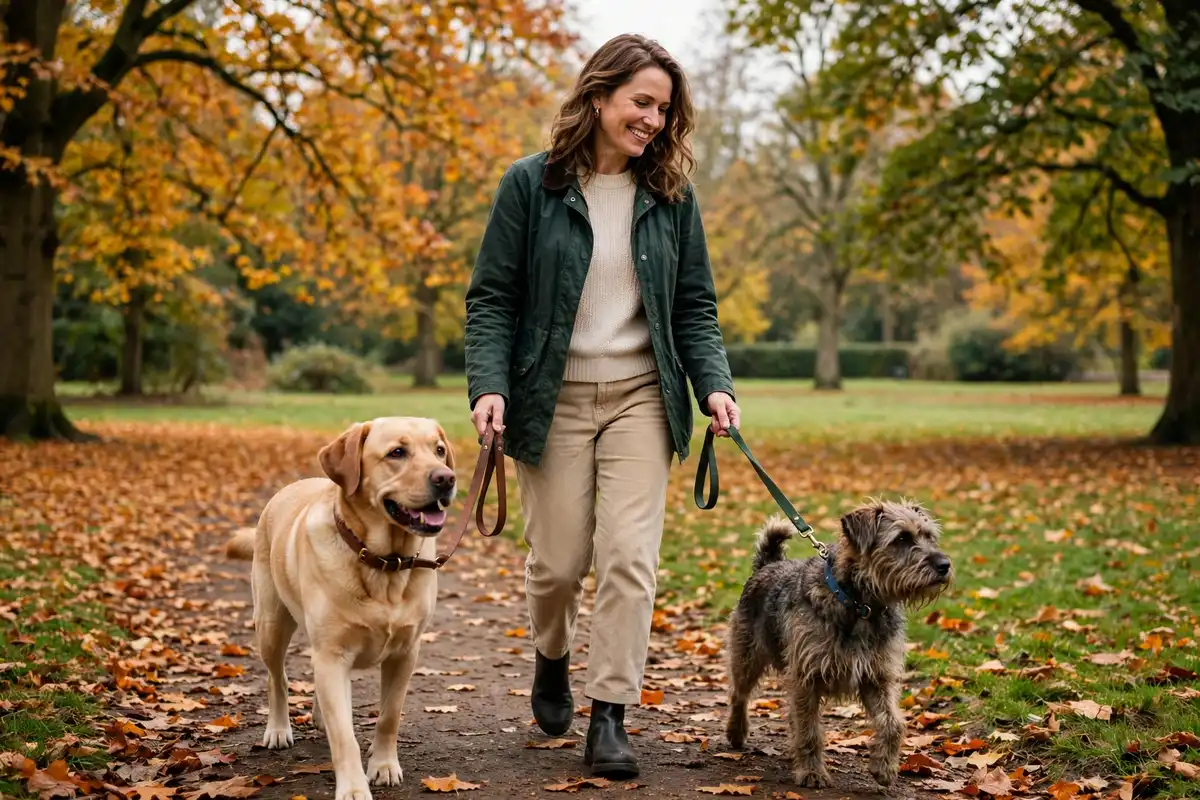
Bringing a dog home is a commitment that can last fifteen years, so it pays to choose the right dog breed for the life you actually live — not the one you imagine on a Sunday walk. Every year, UK shelters take in dogs whose owners simply picked the wrong match: the border collie in a small flat, the husky bought for its looks by someone who hates the cold, the tiny puppy that grew into a very large, very strong adult. This guide walks through the practical questions — space, energy, grooming, temperament, cost and health — that will lead you to a breed you and the dog will both be happy with.
Start with Your Home and Space
Be honest about where you live. A large, powerful breed needs room to turn, stretch and play, while many smaller breeds adapt happily to flats provided they get enough exercise and company. Consider your garden or lack of one, stairs that an elderly or long-backed dog may struggle with, and how much of your living space you are prepared to share with muddy paws and shedding hair. Preparing the home matters too: washable throws and easy-clean fabrics make the early months far less stressful, and our ideas for refreshing your space with throw pillow covers show how simple changes can make a room both smarter and more dog-friendly. Renters should also check their tenancy agreement before falling for a puppy photograph.
Match the Breed’s Energy to Your Routine
Energy mismatch is the number one cause of behaviour problems. Working breeds such as collies, spaniels and shepherds were bred to be busy all day, and they need one and a half to two hours of exercise plus mental work — training, scent games and problem-solving — to stay settled. At the other end, many companion and brachycephalic breeds are content with two gentle half-hour walks. Look at your real week, not your best week: if you work long hours, who walks the dog at midday? Choose the right dog breed for the routine you already have, and both you and the dog will be calmer for it.
Choose the Right Dog Breed for Your Family Life
Temperament matters as much as size. Some breeds are famously patient with children; others are sensitive, independent or inclined to guard, and need experienced handling. If your household includes cats or small pets, research prey drive carefully. Think about visitors, too — a breed that adores people will thrive in a sociable home, while a reserved breed may find constant guests stressful. Transport is part of family life as well: a large breed needs boot space and safe restraint on car journeys, so if a bigger dog is on your list, our guide to buying a used car with confidence and the advice on buying cars online safely through AutoTrader can help you find something with room for everyone.
Grooming, Shedding and Allergies
Every dog needs grooming, but the range is enormous. Breeds such as poodles and bichon frises have hair that grows continuously and needs professional clipping every six to eight weeks; double-coated breeds like huskies and German shepherds shed heavily twice a year; short-coated breeds need little more than a weekly brush. No breed is truly hypoallergenic, though low-shedding coats suit many allergy sufferers better. Price professional grooming into your budget if you choose a high-maintenance coat, and remember that grooming is also bonding time and a chance to check skin, ears and lumps.
The Real Cost of Dog Ownership
Beyond the purchase price or adoption fee, a dog costs money every single month: food, insurance, vaccinations, flea and worm treatment, grooming, toys, bedding and the occasional emergency vet bill, which can run into thousands of pounds. Over a lifetime, even a small dog commonly costs well into five figures. Treat it as a long-term financial commitment — setting aside a monthly amount for your dog is the same habit that underpins any sensible saving plan, and our guide to maximising your returns explains how small, regular contributions build a reassuring cushion over time. Pet insurance deserves particular thought: it is cheapest when a dog is young and healthy, and it turns frightening vet decisions into purely medical ones.
Health, Lifespan and Responsible Buying
Every breed carries predispositions — hip problems in some large breeds, breathing issues in flat-faced breeds, back problems in long, low dogs. Read up on the conditions linked to any breed you are considering and ask breeders directly what health testing the parents have had; a responsible breeder will welcome the question and show you paperwork. If you are buying a puppy, always visit, meet the mother, and never agree to a car-park handover or a courier delivery. Online puppy scams are unfortunately common in the UK, and if you are ever caught out financially, our guide on how to get money back from a scammer sets out the steps to take. Rescue centres are the other excellent route: staff there know their dogs’ personalities and will help match you honestly.
Puppy, Adult Dog or Rescue?
The breed decision is only half the story; the dog’s age matters too. Puppies are delightful but demand months of house training, socialisation and broken sleep, and their adult personality is partly a lottery. An adult rescue dog comes with its character already visible — size, energy and temperament are known quantities, which makes matching far more predictable. Older dogs suit many households beautifully: they are often calmer, sometimes already house-trained, and deeply rewarding to give a second chance. Whichever route you take, build in a settling-in period of several weeks where the dog learns your routines and you learn theirs.
Final Thoughts
The right dog is rarely the cutest puppy in the litter — it is the breed whose size, energy, coat and temperament fit your home, your routine and your budget for the next decade and more. Work through the questions in this guide, meet adult dogs of any breed you are considering, and take your time. A careful choice at the start is the single best predictor of a happy dog and a happy owner.
