

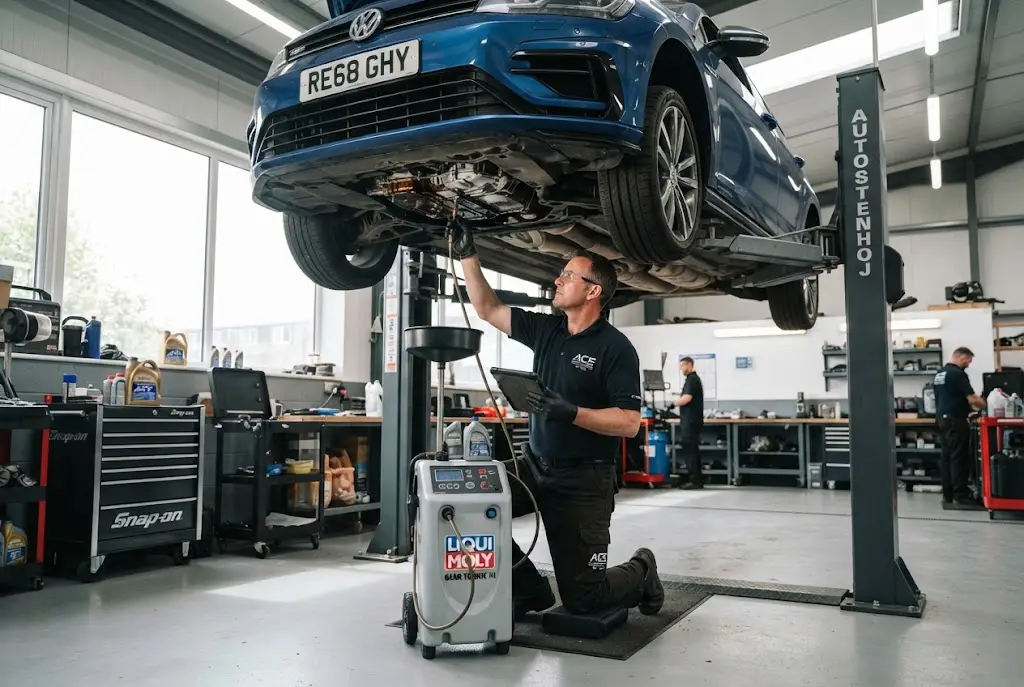
An auto transmission service is an important part of maintaining a vehicle with an automatic gearbox. The transmission controls how engine power reaches the wheels, and it relies on the correct fluid, lubrication, hydraulic pressure and mechanical components to operate smoothly. Regular maintenance can help identify signs of wear and give drivers an opportunity to address developing problems before they become more complicated.
Transmission servicing is not necessarily the same for every vehicle. Some manufacturers specify particular fluid types, service intervals and procedures, while others use systems that require specialised equipment. Understanding what a gearbox service involves, how transmission fluid changes work and what affects the cost can help UK drivers make better-informed maintenance decisions.
What Is an Auto Transmission Service?
An auto transmission service is a maintenance procedure designed to inspect and maintain an automatic vehicle transmission. Depending on the vehicle and manufacturer’s requirements, the service may include checking the transmission fluid, replacing fluid, inspecting for leaks and assessing the gearbox for signs of wear or abnormal operation.
Some automatic transmissions require specific servicing procedures rather than a simple fluid replacement. The correct approach depends on the transmission design, vehicle specification and manufacturer’s recommendations.
A transmission service should also be distinguished from transmission repair. Servicing is primarily preventative maintenance, whereas repair involves diagnosing and fixing an identified fault such as slipping, damaged components or abnormal gearbox operation.
Why Is Transmission Servicing Important?
The transmission contains numerous moving components that operate under heat, pressure and mechanical load. Transmission fluid helps lubricate and, in many automatic systems, assists with hydraulic operation and heat management.
Over time, fluid can deteriorate or become contaminated. The exact service requirements vary considerably, so vehicle owners should consult their manufacturer’s maintenance schedule rather than assuming that every gearbox requires the same interval.
Regular maintenance can also provide an opportunity to identify leaks, unusual noises, delayed engagement or changes in shifting behaviour. Detecting these symptoms early may make diagnosis easier.
What Does a Transmission Service Include?
The contents of a professional transmission service vary according to the vehicle. A garage may carry out several checks as part of the procedure.
Transmission Fluid Inspection
The technician may assess the condition and level of the transmission fluid where the vehicle’s design permits these checks. Some modern transmissions do not have a conventional dipstick and require a specific inspection procedure.
Transmission Fluid Change
A transmission fluid change involves replacing old fluid with the correct specification for the vehicle. Using the wrong fluid can affect transmission operation, so the manufacturer’s specification is important.
Leak Inspection
The transmission and surrounding components can be checked for signs of fluid leakage. A leak should not simply be ignored because insufficient fluid can contribute to transmission problems.
Filter or Pan Service
Depending on the gearbox design, servicing may involve replacing a transmission filter or removing and servicing the transmission pan. Not every transmission uses a serviceable filter or requires the same procedure.
Operational Checks
The vehicle may be assessed for unusual shifting, delayed engagement, slipping, noises or other symptoms that could indicate a developing problem.
Automatic Gearbox Service vs Transmission Service
The terms gearbox service and transmission service are often used interchangeably, but the exact work depends on the type of transmission fitted to the vehicle.
An automatic gearbox can contain complex hydraulic, mechanical and electronic systems. A manual gearbox has a different design and maintenance requirement. Automatic transmissions can also differ significantly from one another, including conventional torque-converter automatics, dual-clutch transmissions and continuously variable transmissions.
Because of these differences, a service procedure suitable for one vehicle should not automatically be applied to another. The vehicle’s manufacturer specifications should guide the servicing process.
When Does Your Car Need an Automatic Transmission Service?
Some drivers wait until a gearbox develops an obvious fault before considering maintenance. However, there are several signs that deserve professional attention.
- Gear changes feel harsh or unusually abrupt.
- The transmission hesitates before engaging Drive or Reverse.
- The vehicle appears to slip between gears.
- There is a noticeable delay when selecting a gear.
- Unusual whining, humming or clunking sounds occur.
- Transmission fluid appears to be leaking.
- The vehicle struggles to maintain smooth acceleration.
- A transmission warning light appears.
These symptoms do not automatically mean the transmission needs a routine service. They may indicate a fault requiring diagnosis and potentially repair. Continuing to drive with significant transmission symptoms without assessment can make it harder to determine the original cause.
How Does an Automatic Transmission Work?
An automatic transmission changes the relationship between engine speed and wheel speed without requiring the driver to manually operate a conventional clutch and select every gear. Different automatic transmission designs achieve this in different ways.
Traditional automatic transmissions commonly use a torque converter and planetary gearsets. Other systems use different mechanical and electronic arrangements. Regardless of design, the transmission needs accurately controlled engagement between components to deliver smooth power to the wheels.
Transmission fluid has an important role in many automatic systems. It can provide lubrication, transfer hydraulic pressure and help manage heat. This is why fluid condition and the correct specification matter during servicing.
Transmission Oil Change and Fluid Change: What’s the Difference?
The phrases transmission oil change and transmission fluid change are often used when discussing gearbox maintenance. In everyday automotive terminology, people may use “oil” and “fluid” interchangeably, but the correct product depends on the transmission.
Automatic transmissions typically require a specifically formulated transmission fluid rather than generic engine oil. The vehicle manufacturer specifies the appropriate fluid type, viscosity and performance requirements.
Using the wrong product can create operational problems. Therefore, a professional service should confirm the exact specification before carrying out a fluid replacement.
How Much Does a Gearbox Service Cost?
The gearbox service cost can vary substantially across the UK. The vehicle, gearbox type, fluid specification, quantity of fluid, replacement parts, labour and service procedure can all affect the final price.
A straightforward fluid service may cost considerably less than a more involved transmission service requiring additional parts or specialist equipment. A vehicle with an existing fault may also require diagnostic work before a garage can provide a meaningful repair estimate.
When asking how much is a gearbox service, it is therefore useful to ask exactly what the quoted price includes. A basic fluid replacement and a comprehensive gearbox service may not involve the same work.
What Affects Automatic Transmission Service Price?
An automatic transmission service price can be influenced by several factors:
- Transmission type: Different gearbox designs require different servicing methods.
- Fluid specification: Specialist transmission fluids can vary in price.
- Fluid quantity: Some systems require substantially more fluid than others.
- Filter requirements: Certain transmissions may require filter replacement during servicing.
- Vehicle access: Some transmission designs require additional labour to service correctly.
- Specialist equipment: Certain vehicles may require manufacturer-specific or specialist diagnostic equipment.
- Existing faults: A gearbox problem can require diagnosis and repair beyond routine maintenance.
Should You Change Transmission Fluid Regularly?
There is no single service interval that applies to every automatic vehicle. Some manufacturers specify regular transmission-fluid replacement, while others use different maintenance schedules or procedures.
The safest approach is to follow the manufacturer’s service information for the exact vehicle and transmission. If a vehicle is used for demanding conditions, such as frequent towing or heavy-duty operation, additional maintenance requirements may apply depending on the manufacturer’s guidance.
Drivers should also avoid assuming that a transmission described as “sealed for life” never needs professional inspection. If the vehicle develops symptoms, fluid leakage or abnormal operation, diagnosis may still be appropriate.
Can a Transmission Service Fix Gear-Shifting Problems?
Sometimes maintenance can improve transmission operation when fluid condition or level is contributing to the symptoms. However, a service is not a guaranteed cure for every shifting problem.
Harsh shifts, slipping or delayed engagement can have multiple causes, including mechanical wear, hydraulic issues, electronic faults or other transmission problems. If symptoms are already present, the vehicle may require diagnosis before deciding whether a routine service is appropriate.
This distinction can prevent unnecessary spending. A driver experiencing a serious gearbox fault should not assume that replacing the fluid alone will repair damaged components.
Transmission Maintenance Tips for UK Drivers
Good driving and maintenance habits can help owners monitor the condition of their transmission.
- Follow the manufacturer’s recommended maintenance schedule.
- Use only the transmission fluid specified for the vehicle.
- Check for signs of fluid leakage.
- Pay attention to changes in gear-shifting behaviour.
- Do not ignore warning lights.
- Avoid continuing to drive when serious transmission symptoms appear.
- Keep records of transmission maintenance and fluid changes.
Transmission maintenance should also be considered alongside other vehicle systems. For example, problems with the vehicle’s electrical systems can affect electronically controlled transmissions, while battery or charging issues can create broader electrical symptoms. Drivers can learn more about auto electrical services when investigating vehicle electrical faults.
How to Choose a Gearbox Service Provider
When looking for an automatic gearbox specialist, consider whether the garage has experience with your particular vehicle and transmission type. This can be especially important for modern automatic systems with electronic controls or manufacturer-specific service procedures.
Before authorising work, ask what the service includes, which fluid will be used and whether any additional parts are included in the quote. If your vehicle already has a noticeable transmission problem, ask whether the garage will diagnose the fault before recommending a service.
A clear explanation of the work can help you distinguish routine maintenance from a repair recommendation.
When Should You Book an Auto Transmission Service?
An auto transmission service can form part of routine vehicle maintenance when it is recommended for your particular transmission. It can also be worth arranging an inspection when you notice changes in fluid condition, shifting behaviour or transmission performance.
However, serious symptoms should not automatically be treated as a routine service requirement. If the vehicle is slipping, refusing to engage gears, making significant noises or displaying a transmission warning, professional diagnosis should take priority.
Final Thoughts
An auto transmission service is an important maintenance procedure for vehicles equipped with automatic gearboxes, but the correct service depends on the vehicle and transmission design. Fluid checks, transmission fluid changes, leak inspections, filter replacement and operational checks may all form part of appropriate maintenance.
Understanding the difference between routine servicing and transmission repair can help UK drivers approach gearbox problems more effectively. Rather than focusing only on the advertised gearbox service cost, consider the procedure being offered, the fluid specification and whether the garage has experience with the relevant transmission.
Regular vehicle maintenance works best when individual systems are considered together. Transmission care, air-conditioning maintenance, electrical diagnostics and battery servicing all have different requirements, so diagnosing the correct system before replacing parts remains an important part of responsible vehicle ownership.
