

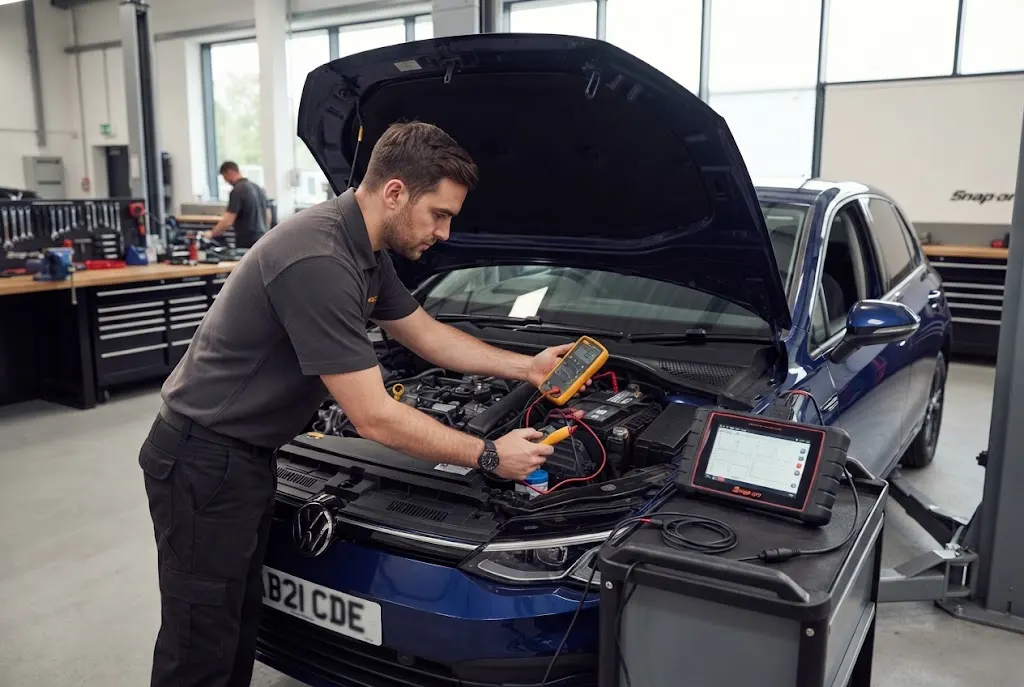
Auto electrical services cover the diagnosis, maintenance and repair of the electrical systems that help modern vehicles start, operate and communicate. From the battery and alternator to lighting, sensors, wiring, electronic control units and vehicle accessories, electrical components play a major role in everyday driving. When something goes wrong, the symptoms are not always obvious, which is why accurate diagnosis is often more useful than replacing parts based on guesswork.
Modern cars contain considerably more electrical and electronic technology than older vehicles. Starting systems, charging systems, lighting, infotainment, safety equipment, climate controls and engine management can all depend on electrical components. This guide explains what auto electrical services include, common warning signs, what an auto electrician does, how vehicle electrical diagnostics work and when professional assistance may be necessary.
What Are Auto Electrical Services?
Auto electrical services are professional services designed to diagnose, maintain and repair a vehicle’s electrical and electronic systems. Depending on the garage or specialist, services may include battery testing, alternator diagnosis, starter-motor checks, electrical fault finding, wiring repairs, lighting repairs and electronic diagnostics.
The exact work required depends on the vehicle and the symptoms. A car that will not start, for example, may have a flat battery, charging-system problem, starter issue, damaged wiring or another electrical fault. Testing the system can help identify the actual cause.
Electrical specialists can also work with electronic vehicle systems. Modern cars use sensors and control modules for functions ranging from engine management to safety and comfort features. Consequently, an electrical problem may affect several apparently unrelated systems.
What Does an Auto Electrician Do?
An auto electrician specialises in diagnosing and repairing vehicle electrical systems. Unlike a general mechanical repair, electrical fault finding often requires systematic testing to establish where a problem originates.
An auto electrician may investigate issues involving:
- Vehicle batteries and charging systems.
- Alternators and starter motors.
- Vehicle lighting.
- Electrical wiring and connections.
- Fuses and relays.
- Power windows and central locking.
- Electronic control systems.
- Vehicle sensors.
- Entertainment and accessory systems.
- Electrical components associated with climate control.
The specialist may use diagnostic scanners, multimeters, battery testers and other equipment to test the vehicle rather than relying solely on visual inspection.
Common Signs of a Vehicle Electrical Problem
Electrical faults can produce a wide range of symptoms. Some are minor, while others can prevent the vehicle from starting or affect important safety systems.
- The engine does not crank or struggles to start.
- Interior or exterior lights become unusually dim.
- The battery warning light appears on the dashboard.
- Electrical accessories stop working.
- Windows, locks or mirrors operate intermittently.
- The infotainment system repeatedly resets.
- Warning lights appear unexpectedly.
- The battery repeatedly becomes flat.
- Electrical components behave inconsistently.
- There is a burning smell or visible damage around wiring.
A single symptom can have multiple causes. For example, a vehicle that repeatedly needs jump starting may have a battery problem, but it could also have a charging fault or an electrical drain that is discharging the battery while the car is parked.
Vehicle Electrical Repair Explained
Vehicle electrical repair involves locating and correcting faults within the vehicle’s electrical or electronic systems. The repair may be relatively simple, such as replacing a damaged fuse, or considerably more involved, such as tracing a wiring fault through multiple circuits.
Good electrical repair begins with diagnosis. Replacing a battery because the vehicle will not start may solve the problem temporarily if the battery is genuinely defective. However, if the alternator is not charging correctly, the replacement battery could eventually become discharged as well.
Likewise, repeatedly replacing fuses without finding why they are blowing can leave the underlying electrical fault unresolved.
How Does Electrical Diagnostics Work?
Electrical diagnostics is the process of testing a vehicle’s electrical and electronic systems to identify the source of a fault. The exact process depends on the symptoms and vehicle.
A technician may begin by asking when the problem occurs and whether it is intermittent or permanent. Visual inspections can then identify damaged wiring, loose connections, corrosion or other obvious problems.
Electrical measurements can help determine whether voltage, current and continuity are within the expected range. On modern vehicles, diagnostic equipment may also communicate with electronic control modules and identify stored fault information.
However, a diagnostic fault code does not necessarily mean that the component named by the code should simply be replaced. Further testing may be needed to determine why the code appeared and whether the component itself is actually defective.
Car Electrical Repair: Common Problems
Car electrical repair can involve many different systems. Some of the most frequently encountered areas include the following.
Battery Problems
A weak or damaged battery can cause slow starting, clicking noises, dim lighting and other electrical symptoms. Battery testing can help determine whether the battery is capable of holding and delivering the required charge.
Drivers who need more information about battery testing, replacement and maintenance can explore auto battery service as part of a wider vehicle-maintenance routine.
Alternator Faults
The alternator helps maintain the vehicle’s electrical supply and recharge the battery while the engine is running. Alternator problems can result in charging issues, warning lights or a battery that repeatedly loses charge.
Alternator repairs may involve diagnosis of the alternator itself, its connections, drive system or related charging components. The correct repair depends on the cause of the fault.
Starter Motor Problems
The starter motor is responsible for turning the engine when the vehicle is started. A fault can result in a clicking sound, slow cranking or a complete lack of engine cranking. Battery condition and electrical connections should also be considered when diagnosing starting problems.
Wiring and Connection Faults
Wiring can become damaged, corroded or disconnected. Poor connections can cause intermittent faults that are particularly difficult to identify without systematic testing.
Lighting Problems
Headlights, brake lights, indicators and other lighting systems can be affected by bulbs, wiring, switches, fuses, control modules or connections. Lighting faults should be addressed promptly because functioning vehicle lights are important for visibility and road safety.
Battery Diagnostics vs Auto Electrical Diagnostics
Battery testing is one part of the broader electrical diagnostic process. If the vehicle has a starting problem, a technician may test the battery first, but that does not necessarily establish that the battery is the only problem.
For example, a healthy battery can still become discharged if the alternator is not charging it properly. Alternatively, an electrical component may continue drawing power while the vehicle is parked. In these situations, replacing the battery alone may not solve the underlying issue.
This is why comprehensive diagnosis can be useful when electrical symptoms continue after a battery replacement.
When Do You Need an Auto Electrical Specialist?
An auto electrical specialist can be particularly useful when a vehicle develops a fault that is difficult to trace or involves multiple electrical systems.
Consider professional diagnosis if:
- Your vehicle repeatedly needs jump starting.
- A new battery becomes flat unexpectedly.
- Several electrical systems fail at the same time.
- Warning lights appear without an obvious mechanical cause.
- Electrical faults occur intermittently.
- The vehicle has wiring or charging problems.
- Electronic systems stop communicating correctly.
- You notice damaged wiring or electrical connections.
Complex electrical problems can be difficult to diagnose safely without the correct equipment and technical knowledge. Professional testing can reduce the risk of replacing components unnecessarily.
Vehicle Electrics in Modern Cars
Vehicle electrics have become increasingly complex as manufacturers have added more electronic systems. A modern vehicle can contain numerous control modules and sensors communicating with one another.
Features such as advanced driver assistance, parking sensors, digital dashboards, climate control, keyless entry and infotainment can all depend on electrical and electronic systems.
This increased complexity means that an apparently simple fault can sometimes have several possible causes. For example, an air-conditioning problem may involve refrigerant, mechanical components or electrical controls. Drivers dealing with cooling-system problems can also review car air conditioning repair to understand why diagnosis matters.
How Much Do Auto Electrical Services Cost?
The cost of auto electrical services varies considerably because electrical repairs range from simple component replacements to complex diagnostic investigations.
A basic battery or bulb replacement may be relatively inexpensive, while tracing an intermittent wiring fault or diagnosing multiple electronic systems can require considerably more labour. The vehicle model, fault complexity, replacement parts and diagnostic equipment can all influence the final price.
Rather than asking only for an hourly rate, it is useful to ask what the diagnostic process includes and whether the quoted price covers testing, labour and replacement components.
Can Mobile Auto Electrical Services Help?
Some specialists provide mobile vehicle electrical services, allowing technicians to attend a customer’s location. This can be particularly convenient when a vehicle will not start or cannot easily be driven to a garage.
However, not every electrical problem can be fully repaired at the roadside. Some faults require workshop equipment, vehicle lifting equipment or access to replacement components. Before booking a mobile service, explain the symptoms and ask whether the required diagnosis or repair can be completed at the location.
How to Prevent Common Electrical Problems
Not every electrical failure can be prevented, but sensible maintenance can help reduce avoidable problems and identify faults earlier.
- Keep the battery terminals and connections in good condition.
- Follow the manufacturer’s battery and charging-system maintenance recommendations.
- Pay attention to battery warning lights.
- Do not ignore repeated starting difficulties.
- Replace damaged bulbs promptly.
- Have recurring electrical faults professionally diagnosed.
- Inspect visible wiring for obvious damage when appropriate.
- Keep records of battery and charging-system work.
It is also useful to understand how the electrical system interacts with other vehicle components. Transmission systems can contain electronic controls, while climate-control systems can also rely on electrical sensors and modules. If you are maintaining several vehicle systems, keeping separate records of repairs can make future diagnosis easier.
What to Ask Before Booking an Auto Electrician
Before arranging an electrical repair, provide as much information about the symptoms as possible. Explain when the problem occurs, whether it is intermittent and whether any warning lights appear.
You can also ask the technician:
- What diagnostic checks will be performed?
- Is diagnosis charged separately from the repair?
- Which component is believed to be causing the fault?
- Are replacement parts included in the estimate?
- Will the vehicle need to remain at the workshop?
- What happens if the initial test does not identify the problem?
Clear communication can make complex electrical repairs easier to understand and can help you compare quotations on a like-for-like basis.
When Should You Book Auto Electrical Services?
You should consider professional auto electrical services when electrical problems are recurring, difficult to identify or affecting the safe and reliable operation of your vehicle. A single flat battery may have a straightforward explanation, but repeated electrical failures deserve further investigation.
Do not ignore symptoms such as burning smells, visibly damaged wiring, repeated fuse failures or multiple electrical systems shutting down. These issues can require prompt professional assessment.
Final Thoughts
Auto electrical services cover a broad range of vehicle systems, from batteries and alternators to wiring, lighting, sensors and electronic control modules. As modern cars become increasingly dependent on electronics, accurate diagnosis has become an important part of vehicle maintenance.
The key is to identify the cause rather than simply replacing the component associated with the most obvious symptom. Battery testing, charging-system checks, electrical measurements and electronic diagnostics can all play a role in finding the underlying problem.
Whether you need an auto electrician, vehicle electrical repair or specialist electrical diagnostics, choosing a provider with suitable equipment and experience can help ensure the fault is properly investigated. Combined with regular battery, air-conditioning and transmission maintenance, electrical care forms an important part of responsible vehicle ownership.
