

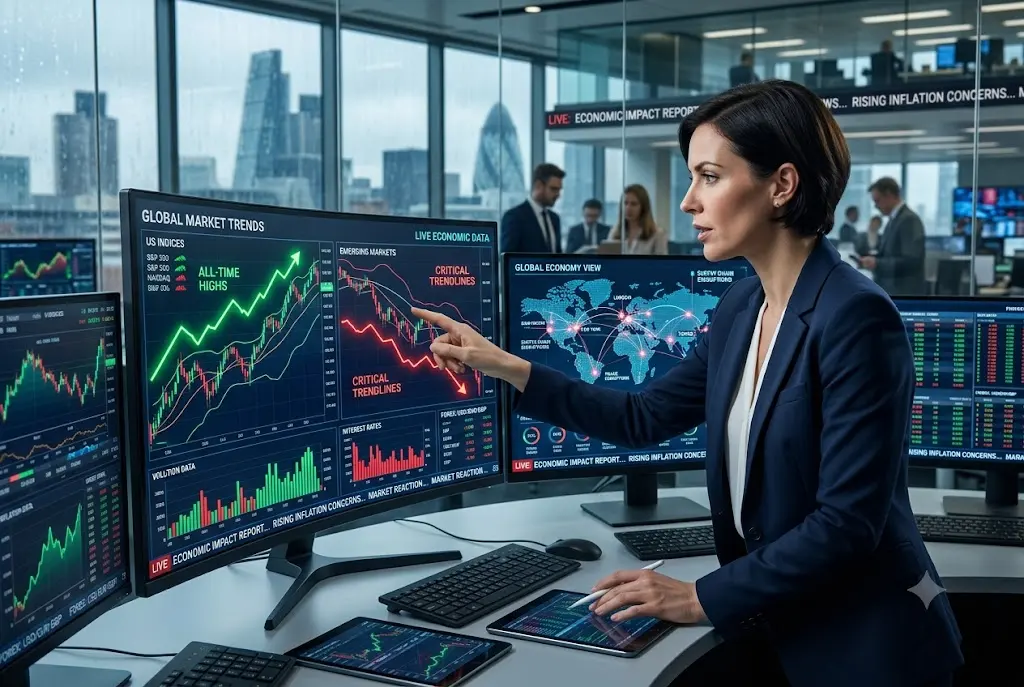
In today’s rapidly evolving financial landscape, staying informed about economic trends has become more important than ever. Investors, entrepreneurs, business owners, and consumers all rely on economic information to make smarter financial decisions. Understanding market movements, economic indicators, and financial trends can help individuals better navigate opportunities and challenges in both personal and professional finance.
FintechZoom economy insights have become a popular topic among readers interested in financial markets, technology, investing, and economic developments. As financial technology continues transforming the global economy, access to timely analysis and market information is increasingly valuable.
This guide explores key economic concepts, major market drivers, important indicators, and how financial insights can help individuals and businesses make more informed decisions.
Understanding the Modern Economy
The economy consists of countless interactions between consumers, businesses, governments, and financial institutions. These interactions influence employment, spending, investments, production, and overall economic growth.
Several factors contribute to economic performance:
- Consumer spending
- Business investment
- Government policies
- Interest rates
- Global trade
- Technological innovation
Understanding how these components interact provides valuable context for interpreting economic news and market trends.
Why Economic Insights Matter
Economic information affects nearly every aspect of financial decision-making.
Investors use economic data to evaluate market opportunities, while businesses rely on economic forecasts to guide growth strategies.
Economic insights help stakeholders:
- Identify market trends
- Manage financial risk
- Evaluate investment opportunities
- Plan business expansion
- Improve budgeting decisions
- Prepare for economic changes
Whether managing a business or building a personal investment portfolio, understanding economic conditions can improve decision quality.
Key Economic Indicators to Watch
Gross Domestic Product (GDP)
GDP measures the total value of goods and services produced within an economy.
Strong GDP growth often signals economic expansion, while slowing growth may indicate economic challenges.
Inflation
Inflation reflects changes in the prices of goods and services over time.
Moderate inflation is generally considered normal, but excessive inflation can reduce purchasing power and affect investment returns.
Employment Data
Employment levels provide insights into labor market strength and economic activity.
Low unemployment rates often indicate healthy economic conditions.
Interest Rates
Central banks use interest rates as a tool to manage economic growth and inflation.
Changes in interest rates can affect borrowing, spending, investing, and business expansion.
Consumer Confidence
Consumer confidence measures how optimistic individuals feel about their financial situations and the economy.
Higher confidence levels often support increased spending and economic activity.
The Impact of Financial Technology on the Economy
Financial technology, commonly known as fintech, has transformed how individuals and businesses interact with financial services.
Key fintech innovations include:
- Digital payments
- Mobile banking
- Online lending
- Investment platforms
- Financial analytics tools
- Automated financial services
These innovations have increased accessibility, efficiency, and transparency across many areas of finance.
Businesses seeking modern financial infrastructure often leverage solutions similar to those discussed in Flexible Corporate Account Solutions for Singapore Businesses, where digital banking capabilities support operational efficiency and growth.
How Economic Trends Influence Investors
Investors closely monitor economic indicators because market performance is often influenced by broader economic conditions.
Common factors affecting investment decisions include:
- Economic growth rates
- Corporate earnings
- Interest rate changes
- Inflation trends
- Government policies
- Global events
Understanding these relationships helps investors evaluate risk and identify opportunities.
Active traders, for example, frequently incorporate economic analysis into their strategies, as discussed in Profitable Intraday Trading Advice.
Economic Insights for Traders
Financial markets often react quickly to economic news and policy announcements.
Traders who understand economic indicators may gain valuable context when evaluating short-term market movements.
Economic releases frequently monitored by traders include:
- Employment reports
- Inflation data
- Interest rate decisions
- Manufacturing reports
- Consumer sentiment surveys
Developing the ability to interpret these reports often requires significant practice and experience. The concepts explored in The 10,000-Trade Rule: How Deliberate Practice Can Rewire Your Brain for Profitability highlight the importance of continuous learning and skill development.
Economic Insights for Entrepreneurs
Business owners can also benefit significantly from understanding economic trends.
Economic awareness helps entrepreneurs:
- Forecast demand
- Manage cash flow
- Plan investments
- Evaluate hiring decisions
- Assess expansion opportunities
For example, entrepreneurs launching consumer-focused businesses such as those discussed in Build Your Brand Fast with Private Label Skincare can use economic insights to better understand consumer behavior and market conditions.
The Role of Data in Financial Decision-Making
Modern financial decision-making increasingly relies on data analysis.
Organizations use data to:
- Identify trends
- Measure performance
- Reduce uncertainty
- Improve forecasting
- Support strategic planning
Advancements in financial technology have made sophisticated data analysis more accessible than ever before.
Challenges of Economic Forecasting
Although economic analysis provides valuable insights, forecasting remains inherently challenging.
Unexpected events can quickly alter economic conditions.
Examples include:
- Geopolitical developments
- Natural disasters
- Technological disruptions
- Policy changes
- Global market shocks
As a result, economic forecasts should be viewed as informed estimates rather than guarantees.
How Individuals Can Use Economic Insights
Economic knowledge is valuable even for individuals who are not professional investors or business owners.
Consumers can use economic information to make better decisions regarding:
- Savings
- Investments
- Career planning
- Education financing
- Major purchases
- Retirement planning
For example, students evaluating educational financing options may benefit from understanding borrowing costs and economic conditions, as discussed in Traceloans.com Student Loans Smarter Trusted Borrowing.
Frequently Asked Questions
What are FintechZoom economy insights?
The term generally refers to financial and economic analysis covering market trends, economic indicators, technology developments, and investment-related topics.
Why are economic indicators important?
Economic indicators help individuals and organizations understand current economic conditions and make informed financial decisions.
How does fintech affect the economy?
Financial technology improves access to financial services, increases efficiency, and supports innovation across banking, payments, lending, and investing.
Can economic insights improve investing decisions?
Economic analysis can provide valuable context that helps investors evaluate risks and opportunities.
Who benefits from economic insights?
Investors, traders, entrepreneurs, students, business owners, and consumers can all benefit from understanding economic trends.
Conclusion
FintechZoom economy insights highlight the growing importance of economic awareness in today’s interconnected financial world. Understanding economic indicators, market trends, technological innovations, and financial developments can help individuals and organizations make more informed decisions.
Whether you’re an investor, trader, entrepreneur, student, or business professional, staying informed about economic conditions can provide valuable perspectives that support better financial planning, risk management, and long-term success.
