

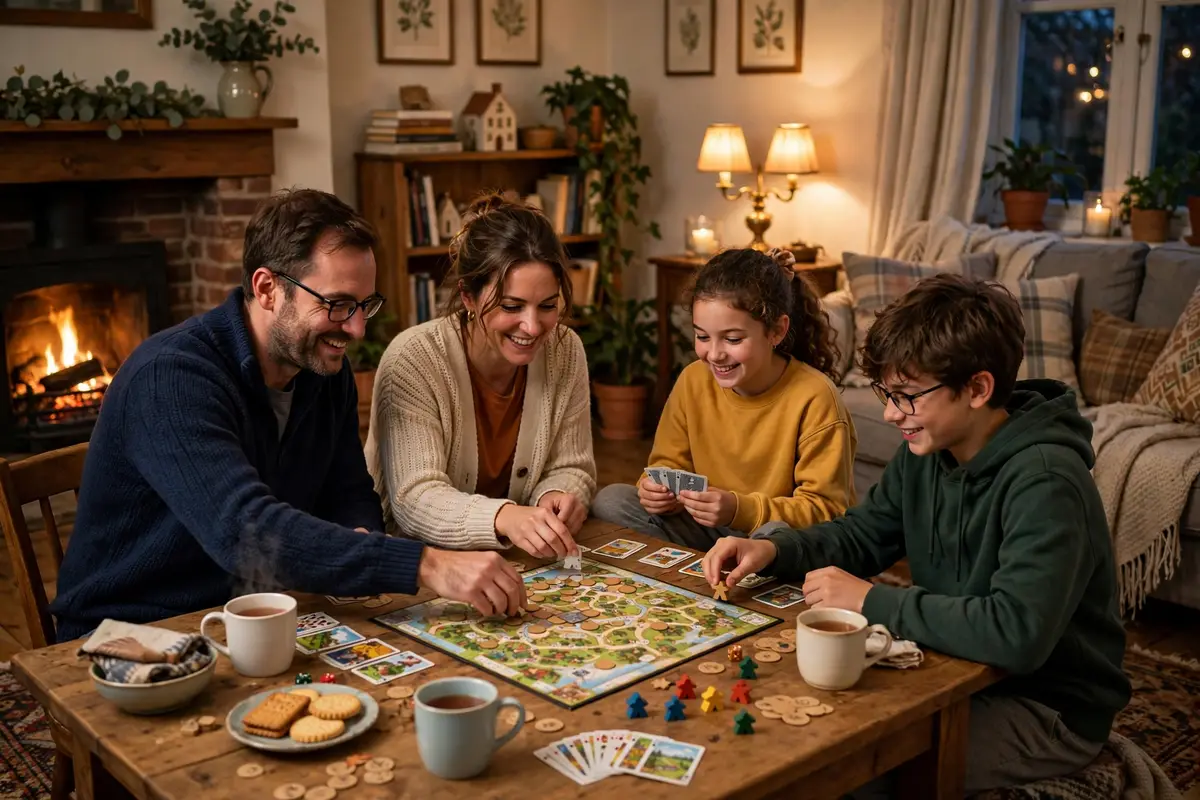
Family board games turn an ordinary evening into something everyone looks forward to. The best family board games in the UK mix simple rules with just enough challenge to keep adults interested, and they work for a wide range of ages. A good game night needs no screens, no booking and no big spend, which is part of the appeal.
This guide covers the strongest picks for different ages and moods, plus practical tips for choosing games your family will actually play more than once.
Why family board games work so well
Board games give families a shared activity where everyone is on equal terms. A nine-year-old can beat a parent at the right game, and that matters. The table becomes the focus, phones go away, and conversation happens naturally between turns.
Games also build useful skills without feeling like lessons. Children practise counting, planning and patience, while adults get a genuine break from work talk. A regular game night can become the easiest family habit to keep, because everyone enjoys it.
If you are planning a week at home, our UK staycation ideas include plenty of slow evenings that suit a longer game.
Quick games for busy weeknights
Not every game night has two hours to spare. Quick games that finish in 20 to 30 minutes fit a school night, and they are often the ones families return to most.
Card games are the simplest starting point. A pack of cards plus a short game like Uno or Dobble costs little and needs no setup. Word games work well too, since they suit mixed ages and spark more laughing than most strategy titles.
Cooperative games are worth trying when younger children are involved. Everyone wins or loses together, so nobody feels singled out. That keeps the mood light and stops one competitive player from spoiling the evening.
Keep the box somewhere visible. Games that live on a high shelf get forgotten, while games on the coffee table get played. A comfortable living room helps too, and small touches like fresh throw pillow covers make the sofa a place people want to settle into.
Strategy games for older children and teens
Once children reach 10 or so, they are ready for games with real decisions. Ticket to Ride, Catan and Carcassonne are the usual first steps, and each one plays differently enough to feel fresh for months.
These games reward planning without punishing a single mistake. A teenager who plans three moves ahead will usually win, which teaches patience in a way lectures never do. Most strategy games take 45 to 60 minutes, so they suit a weekend evening better than a school night.
One practical tip: read the rules together before the first game. A 10-minute read-through avoids the arguments that start when someone discovers a rule halfway through. If the rules feel long, watch a short how-to-play video first and learn by playing.
Classic games that never get old
Some games have lasted for decades because they still work. Scrabble, Monopoly, Cluedo and Chess each offer something different, and most families already own at least one of them.
Scrabble suits word lovers and mixed ages, since a clever two-letter word can beat a long one. Monopoly needs a time limit, or it will run past bedtime. Agree on a 60-minute limit before you start, and the player with the most money and property at the end wins.
Chess is the cheapest classic of all, since a basic set costs a few pounds and lasts for years. A child who learns chess young gains a hobby that can last a lifetime, and many schools now run chess clubs as well.
Party games for bigger gatherings
When grandparents, cousins or friends join in, the game needs to handle six or more players. Party games like Pictionary, Charades and Wavelength work well here, because they need no deep strategy and everyone can join in at once.
Team play helps when ages vary widely. Pair a younger child with an adult, and the team can compete fairly against older players. This keeps everyone involved instead of leaving the youngest player out.
Keep party games short and lively. A game that runs for two hours will lose half the room, while three quick rounds keep the energy up. Have a second game ready to swap in when attention starts to fade.
Games for younger children
Children under seven need games with short turns and no reading. Snakes and Ladders, Guess Who and simple matching games all work, because the rules take a minute to explain.
Look for games that finish in 15 minutes. Young children lose interest fast, and a game that drags on ends in tears more often than laughter. Let the youngest player go first, and keep the rules flexible when it helps them enjoy it.
The dog will probably want to join in too. If you are thinking about choosing the right dog breed for a family with young children, a calm breed that settles beside the table is a better fit than a restless one.
How to pick the right game for your family
Start with the youngest player. Check the age on the box and treat it as a rough guide, not a rule. A game marked eight and up can work for a sharp seven-year-old, but a game marked 12 and up will frustrate a younger child.
Think about player count as well. A game that needs four players is no use when only three people are home. Look for games that play well with two to six players, so the same box works for quiet evenings and full family gatherings.
Budget matters too. Board games are cheap entertainment compared with a cinema trip or a day out, and a £25 game played 20 times costs little more than a pound per play. If money is tight, our tips to make extra money can help fund a small games shelf without touching the household budget.
Try before you buy when you can. Many board game cafes let families test games for the price of a drink, and libraries in some areas now lend games as well. A game your family enjoys at a cafe is a safe purchase.
Making game night a habit that sticks
The best game night is the one that actually happens. Pick a regular evening, keep it short, and let different family members choose the game each week. A routine beats a grand plan every time.
Nobody needs to drive anywhere, which is part of the charm. Even the learner driver in the family can relax, since the whole evening happens at home. Put the phones in another room, make a pot of tea, and let the games do the talking.
Start small, play often, and let the collection grow one game at a time. Within a few weeks, game night will be the evening everyone protects.
