

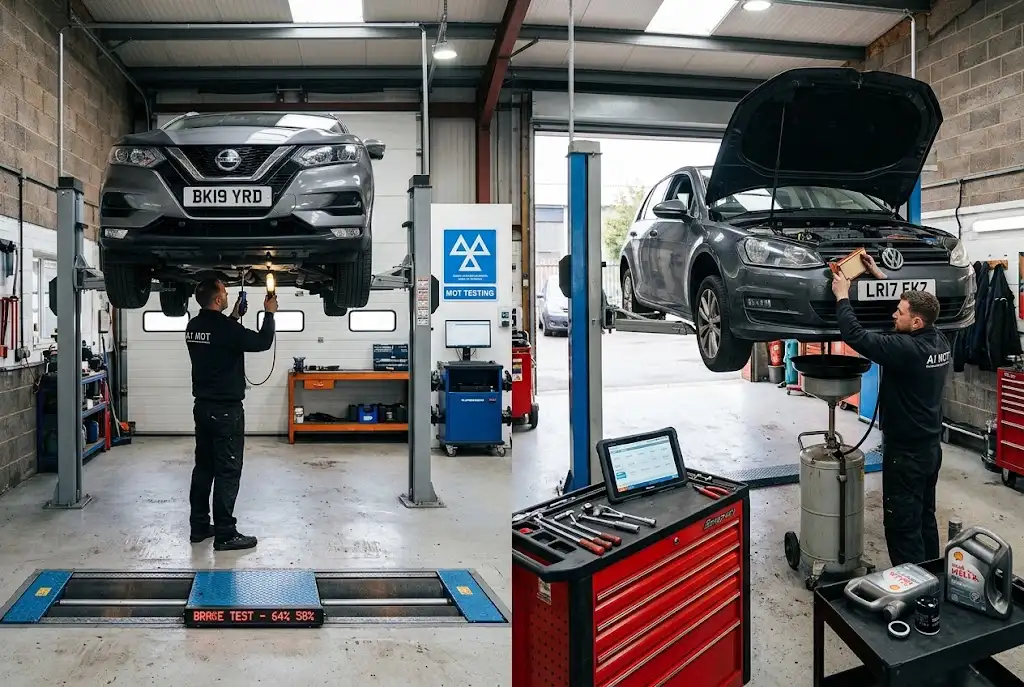
Understanding the difference between MOT and service appointments is important for every UK motorist. Although both involve checking a vehicle, they have different purposes. An MOT is a statutory test that checks whether certain parts of a vehicle meet required legal standards at the time of testing. A service is routine maintenance intended to help keep the vehicle in good mechanical condition.
Because the two appointments are often offered together by garages, it is easy to assume that passing an MOT means the car has also been serviced. It does not. Knowing what each appointment covers can help you arrange the right maintenance at the right time and avoid overlooking important work.
MOT and Service: What Is the Difference?
The simplest way to understand the difference is to consider their purpose. An MOT is a regulated test of specific safety, roadworthiness and environmental requirements. A car service is a maintenance procedure designed to inspect, maintain and, where necessary, replace components according to the vehicle’s servicing requirements.
During an MOT, the tester checks important parts of the vehicle against defined standards. The official GOV.UK guidance confirms that the MOT does not check the general mechanical condition of a vehicle and does not cover the condition of the engine, clutch or gearbox.
A service takes a different approach. It can include maintenance such as oil and filter changes, fluid checks and broader inspections of mechanical components, depending on the vehicle and the service package selected.
What Is an MOT Inspection?
An MOT inspection is a statutory test for vehicles that are required to have one. For most cars, the first MOT is normally due by the third anniversary of registration, followed by annual testing. GOV.UK provides the applicable requirements and allows motorists to check when their vehicle’s MOT expires.
The MOT focuses on specific items that testers are required to examine. These can include areas such as brakes, tyres, lights, steering, suspension, vehicle structure, seat belts, emissions and other prescribed components.
The official MOT inspection manual sets out the procedures and standards for car and passenger vehicle tests.
Importantly, an MOT is a test rather than a general maintenance service. Passing the test means the vehicle met the relevant requirements assessed during that particular MOT; it does not mean every mechanical component is in perfect condition.
What Does a Car Service Include?
A service is broader in purpose because it is intended to maintain the vehicle rather than simply determine whether it meets the MOT test standards.
The exact work depends on the vehicle’s manufacturer, age, mileage, service history and the type of service booked. A routine service may include:
- Checking or replacing engine oil
- Replacing the oil filter where required
- Checking essential fluid levels
- Inspecting brakes
- Checking tyres and tyre condition
- Inspecting steering and suspension components
- Checking lights and electrical systems
- Inspecting the battery
- Checking wipers and windscreen washers
- Inspecting other components according to the service schedule
A full service may cover more areas than an interim service, while a major service can include additional scheduled maintenance items. The exact checklist should always be confirmed with the garage.
Our guide to car service explains what happens during routine servicing and how service schedules work.
What Does an MOT Checklist Cover?
An MOT checklist is based on the items that the MOT test is legally required to assess. The inspection can cover a wide range of vehicle components.
Depending on the vehicle, checks can include:
- Brakes and braking performance
- Tyres and wheels
- Lights and reflectors
- Steering components
- Suspension
- Vehicle body and structure
- Seat belts and related components
- Registration plates and vehicle identification
- Exhaust and emissions
- Windscreen, wipers and washers
- Horn and other required equipment
These checks are carried out against defined testing standards. The MOT inspection manual explains what testers inspect and the reasons particular defects can result in a failure.
However, the checklist should not be interpreted as a complete mechanical health assessment. For example, GOV.UK specifically states that the MOT does not cover the condition of the engine, clutch or gearbox.
Why an MOT Does Not Replace a Service
One of the most common misconceptions among motorists is that an annual MOT is enough to maintain a vehicle. It is not.
An MOT assesses whether specific items meet the required standards at the time of the test. A service is concerned with ongoing maintenance and can address items that fall outside the MOT’s scope.
For example, a vehicle could pass its MOT while still requiring an oil change or other scheduled maintenance. Likewise, a vehicle may have mechanical issues that do not form part of the MOT inspection.
This is why both MOT testing and routine servicing have a place in a vehicle maintenance plan.
What Is the Difference Between MOT and Service Results?
The outcome of an MOT is formally recorded as a test result. A vehicle can pass or fail, and the result may also include minor or advisory problems that motorists should monitor or address.
GOV.UK explains that a vehicle can fail when the test identifies dangerous or major problems. Minor or advisory items may also be recorded depending on the findings.
A service does not work in exactly the same way. The garage normally records the maintenance carried out and may identify additional repairs or maintenance requirements. These recommendations are separate from the statutory MOT result.
Annual MOT and Routine Servicing
An annual MOT is normally required once a vehicle reaches the relevant testing age, while servicing intervals are determined by the vehicle’s maintenance requirements.
These schedules do not necessarily fall on exactly the same date. Some motorists choose to arrange their service and MOT together for convenience, but there is no general rule that says a service must happen at the same time as the MOT.
For many drivers, combining appointments can make vehicle maintenance easier to manage. However, the important point is to ensure neither requirement is overlooked simply because the dates do not coincide.
Should You Have a Full Service and MOT Together?
Booking a full service and MOT together can be convenient, particularly if both are due around the same time. A garage can carry out the statutory test and the maintenance appointment during the same visit, subject to the garage’s facilities and availability.
There can also be a practical advantage to having both appointments close together. If the MOT identifies a defect, the garage may be able to explain whether the issue relates to maintenance that should also be addressed.
However, the two jobs should still be treated as separate procedures. Paying for an MOT does not automatically include a full service, and paying for a full service does not automatically provide a valid MOT.
Major Service and MOT: Are They Different?
A major service and MOT are also separate. A major service can involve more extensive maintenance because certain components may require attention at longer intervals.
The exact contents of a major service depend on the manufacturer’s schedule and the garage’s package. Additional filters, fluids, spark plugs, belts or other scheduled components may be relevant depending on the vehicle.
Meanwhile, the MOT remains a regulated test against defined standards. It does not become a more comprehensive mechanical inspection simply because it is carried out alongside a major service.
Understanding the different service levels can help you choose the right maintenance package. Our guide to full car service explains interim, full and major servicing in greater detail.
Can a Car Pass an MOT but Still Need Repairs?
Yes. An MOT pass should not be interpreted as a guarantee that a vehicle needs no further maintenance.
The test assesses specific items against the MOT standards. A car can therefore pass while still having maintenance requirements that are outside the test’s scope.
Drivers should also remember that vehicle condition can change after the test. A component that was acceptable during the MOT can deteriorate later, particularly if the vehicle is used regularly.
For that reason, motorists should continue to pay attention to warning lights, unusual noises, fluid leaks, changes in braking behaviour and other signs that the vehicle may require attention.
What Happens If Your Car Fails Its MOT?
If a vehicle fails its MOT, the test result records the relevant defects. The next step depends on the nature of the failure, whether the vehicle’s existing MOT remains valid and where repairs are carried out.
GOV.UK states that some vehicles can receive a partial retest under specific circumstances. If the vehicle is taken away for repairs, the rules around returning for a retest depend on factors including where the repairs are completed and when the vehicle is brought back.
Drivers should also pay particular attention to dangerous defects. A vehicle that has failed with a dangerous problem may not be legal or safe to drive until the issue is resolved. GOV.UK advises motorists to ensure vehicles remain roadworthy at all times.
How Much Does an MOT Cost?
The price of an MOT is regulated by a maximum fee. GOV.UK currently lists the maximum fee for a standard car MOT as £54.85, although garages can charge less than the maximum.
Service prices work differently because they depend on the type of service, vehicle, parts, fluids and labour involved.
If you are planning your maintenance budget, our guide to car service cost explains the factors that can influence servicing prices in the UK.
When Should You Book an MOT and Service?
The MOT should be booked before the current certificate expires when your vehicle requires an MOT. You can check the vehicle’s MOT status and expiry date using the official GOV.UK service.
Servicing should follow the manufacturer’s recommended schedule. Depending on the vehicle, this may be based on mileage, time or a combination of both.
Do not wait for the MOT if your vehicle develops a problem. Issues such as unusual braking, steering problems, warning lights, fluid leaks or unusual engine noises should be assessed when they occur.
How to Prepare for an MOT and Service
A little preparation can make both appointments easier.
- Check when your MOT expires.
- Review your vehicle’s service history.
- Check the manufacturer’s servicing schedule.
- Tell the garage about any symptoms you have noticed.
- Remove unnecessary items from the vehicle where appropriate.
- Ask what is included in the service package.
- Ask the garage to contact you before carrying out additional repair work.
- Keep your MOT and service documentation.
It is particularly useful to tell the technician about symptoms that may not be obvious during a standard inspection. A noise, vibration or intermittent warning may provide important context when investigating the vehicle.
Choosing a Garage for MOT and Service
If you want both appointments completed at one location, check that the garage is authorised to conduct MOT tests and can provide the type of servicing your vehicle requires.
When comparing garages, look beyond the headline price. Ask what is included in the service, whether additional work requires approval and whether the garage can follow the relevant manufacturer servicing requirements.
A clear written quotation can also make it easier to distinguish the MOT fee from servicing and repair costs.
MOT and Service: A Simple Way to Remember the Difference
The easiest way to remember the distinction is:
- MOT: A regulated test of specific vehicle requirements against legal standards.
- Service: Planned maintenance intended to help keep the vehicle in good working condition.
- Repair: Work carried out to correct a known or suspected fault.
These three activities can happen during the same garage visit, but they are not interchangeable.
Final Thoughts
MOT and service appointments work together as part of responsible vehicle ownership, but they perform different jobs. The MOT checks specific legal and roadworthiness requirements, while servicing focuses on ongoing maintenance and the manufacturer’s recommended requirements.
A successful MOT does not mean your car has received a service, and a completed service does not replace an MOT when one is due. Keeping both schedules in mind can help you maintain your vehicle properly and avoid confusing a statutory test with routine mechanical care.
For a broader overview of vehicle maintenance and repair options, read our guide to auto services. It covers routine servicing, diagnostics, repairs and other forms of automotive care.
For official UK guidance, motorists can check the GOV.UK MOT guidance, including testing requirements, results and vehicle MOT information.
