

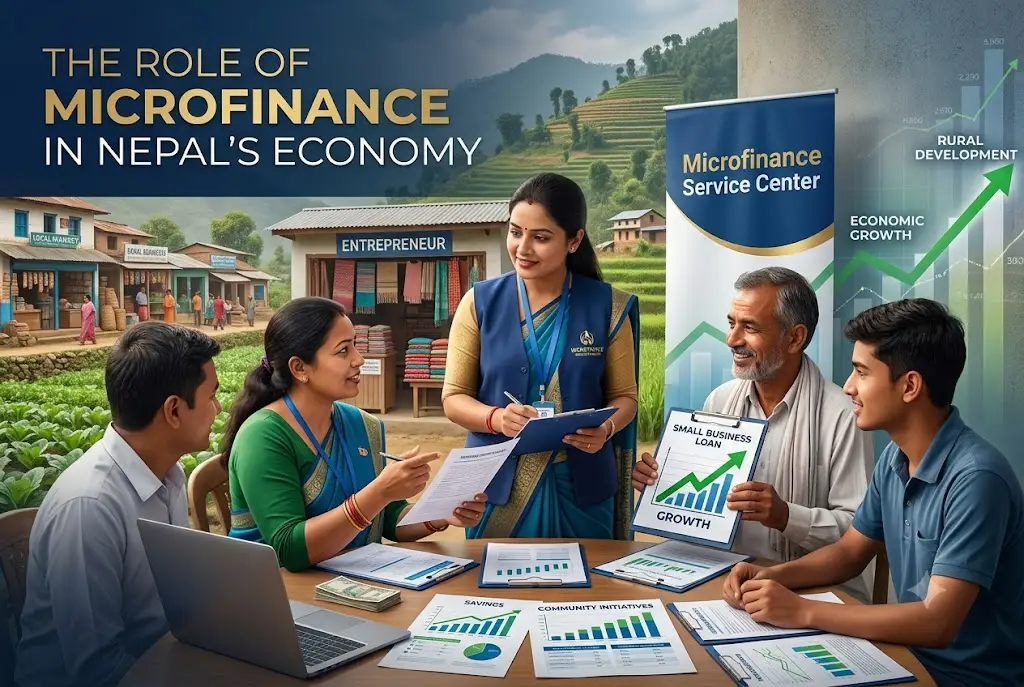
Microfinance has become one of the most important tools for promoting financial inclusion and economic development in Nepal. By providing access to financial services for individuals and communities that may not qualify for traditional banking products, microfinance institutions have helped millions of people improve their livelihoods and create new economic opportunities.
In a country where a significant portion of the population lives in rural areas and depends on agriculture and small-scale enterprises, microfinance plays a vital role in supporting entrepreneurship, reducing poverty, and encouraging sustainable economic growth.
This article explores the role of microfinance in Nepal’s economy, its benefits, challenges, and future potential.
What Is Microfinance?
Microfinance refers to financial services designed for low-income individuals and small businesses that have limited access to conventional banking services.
These services typically include:
- Microloans
- Savings accounts
- Microinsurance
- Financial education
- Business development support
- Money transfer services
The primary goal of microfinance is to empower individuals by providing the financial resources needed to generate income and improve living standards.
The Growth of Microfinance in Nepal
Over the past few decades, Nepal has witnessed significant growth in the microfinance sector. Financial institutions have expanded their reach into rural communities where access to traditional banking remains limited.
This expansion has enabled many people to secure financing for agriculture, livestock farming, retail businesses, handicrafts, and other income-generating activities.
Microfinance institutions continue to play a key role in bridging the gap between underserved populations and formal financial services.
Promoting Financial Inclusion
One of the most significant contributions of microfinance is its ability to promote financial inclusion.
Many rural households historically lacked access to:
- Bank accounts
- Credit facilities
- Insurance products
- Savings opportunities
Microfinance institutions provide these essential services, helping individuals participate more actively in the economy.
Financial inclusion enables people to build financial security and access opportunities that support long-term economic advancement.
Supporting Small Businesses and Entrepreneurship
Small businesses are a major driver of Nepal’s economy. However, entrepreneurs often struggle to obtain financing from traditional lenders due to limited collateral or credit history.
Microfinance helps address this challenge by offering smaller loans designed specifically for microenterprises and self-employed individuals.
These loans support:
- Business startups
- Inventory purchases
- Equipment investments
- Business expansion
- Working capital requirements
As businesses grow, they create employment opportunities and contribute to local economic development.
Empowering Women Through Financial Access
Women represent a significant portion of microfinance clients in Nepal.
Access to financial resources enables women to:
- Start small businesses
- Increase household income
- Improve financial independence
- Support family education
- Participate in community development
Many successful microfinance programs specifically target women entrepreneurs because of their positive impact on families and local communities.
Reducing Poverty and Improving Living Standards
Microfinance contributes to poverty reduction by helping individuals generate sustainable income.
When borrowers successfully invest in productive activities, they can:
- Increase earnings
- Improve housing conditions
- Access healthcare services
- Fund children’s education
- Build emergency savings
These improvements contribute to broader social and economic development.
Strengthening Rural Economies
Rural communities play a central role in Nepal’s economy.
Microfinance supports rural development by financing:
- Agricultural activities
- Livestock production
- Small retail operations
- Local manufacturing
- Community enterprises
Access to credit allows rural entrepreneurs to invest in productivity improvements that strengthen local economies.
Financial Literacy and Education
Many microfinance institutions provide financial education alongside lending services.
Topics often include:
- Budgeting
- Savings management
- Debt management
- Business planning
- Investment basics
Financial literacy helps borrowers make informed decisions and improve long-term financial outcomes.
Strong financial planning principles are equally important at the household level. Learn more in The Importance Of Financial Planning For Nepali Families.
Digital Transformation in Microfinance
Technology is transforming the delivery of financial services across Nepal.
Digital tools help microfinance institutions:
- Reach remote populations
- Process applications faster
- Reduce operational costs
- Improve customer service
- Enhance financial accessibility
This trend reflects broader developments occurring throughout global financial systems. Additional insights can be found in Digital Finance Revolution in Arab Countries.
Challenges Facing Nepal’s Microfinance Sector
Despite its benefits, microfinance faces several challenges.
Over-Indebtedness
Some borrowers may take multiple loans, increasing repayment risks.
Financial Literacy Gaps
Limited financial knowledge can affect borrowing decisions.
Operational Costs
Serving remote communities often increases administrative expenses.
Economic Vulnerability
Natural disasters and economic disruptions can affect borrowers’ ability to repay loans.
The Future of Microfinance in Nepal
The future of microfinance appears promising as financial institutions continue expanding services and adopting digital technologies.
Future growth opportunities include:
- Digital financial services
- Mobile banking integration
- Expanded financial education
- Agricultural financing innovations
- Greater rural outreach
Continued development can help strengthen Nepal’s financial ecosystem and support inclusive economic growth.
Frequently Asked Questions
What is the main purpose of microfinance?
Microfinance aims to provide financial services to individuals and businesses that have limited access to traditional banking systems.
How does microfinance help Nepal’s economy?
It supports entrepreneurship, promotes financial inclusion, reduces poverty, and stimulates economic activity in rural and urban communities.
Who benefits from microfinance?
Small business owners, farmers, women entrepreneurs, and low-income households are among the primary beneficiaries.
Can microfinance reduce poverty?
Microfinance can help reduce poverty by providing access to capital that supports income-generating activities and financial stability.
How is technology changing microfinance?
Digital platforms improve accessibility, efficiency, and service delivery while helping institutions reach more customers.
Conclusion
The role of microfinance in Nepal’s economy extends far beyond lending. It promotes financial inclusion, supports entrepreneurship, empowers women, strengthens rural communities, and contributes to poverty reduction.
As technology continues to reshape financial services and institutions expand their reach, microfinance will likely remain an essential component of Nepal’s economic development strategy for years to come.
