

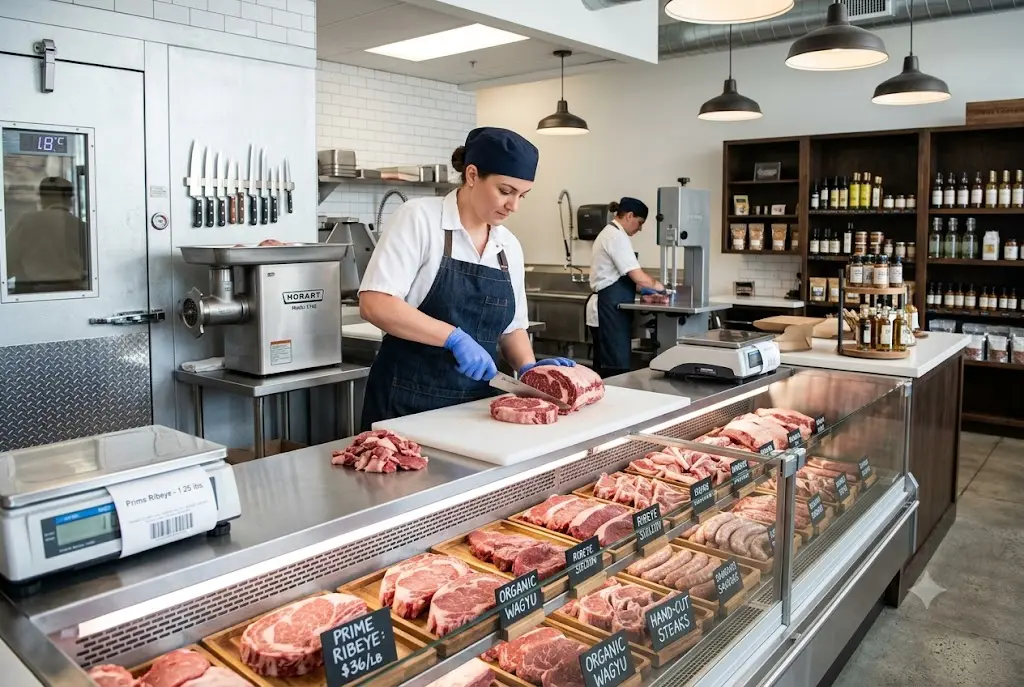
Opening a butcher shop requires more than quality meat products and excellent customer service. Success also depends on having the right equipment, tools, and operational systems in place from the beginning. Proper tools improve efficiency, enhance food safety, increase productivity, and help deliver a professional customer experience.
Whether you’re launching an independent butcher shop, specialty meat market, or local meat processing business, investing in the right equipment is critical for long-term success.
This comprehensive guide explores the essential tools every new butcher shop needs and explains how each contributes to smooth daily operations.
Why Equipment Selection Matters
The quality of your tools directly affects product quality, operational efficiency, employee productivity, and customer satisfaction.
Proper equipment helps:
- Maintain food safety standards
- Improve cutting precision
- Reduce waste
- Increase productivity
- Extend product freshness
- Enhance customer confidence
Making smart equipment investments early can help avoid costly operational challenges later.
1. Professional Butcher Knives
Knives are among the most important tools in any butcher shop.
Different tasks require specialized knives for efficiency and precision.
Common Knife Types
- Breaking knives
- Boning knives
- Skinning knives
- Trimming knives
- Slicing knives
- Cleavers
Investing in high-quality knives improves cutting accuracy and reduces employee fatigue.
2. Knife Sharpening Equipment
Even the best knives require regular maintenance.
Dull blades reduce efficiency and increase workplace safety risks.
Essential sharpening tools include:
- Sharpening stones
- Honing steels
- Professional sharpening systems
- Electric sharpeners
Maintaining sharp cutting tools supports both productivity and safety.
3. Commercial Meat Grinder
A commercial meat grinder allows butcher shops to create custom ground meat products while maintaining quality control.
Benefits include:
- Fresh ground meat production
- Custom blends
- Value-added products
- Improved inventory utilization
Choosing the right grinder depends on anticipated production volume and product offerings.
4. Meat Saws
Band saws play a crucial role in processing larger cuts of meat and bones.
These machines improve:
- Cutting speed
- Consistency
- Precision
- Workplace efficiency
Commercial-grade saws are often essential for shops handling larger processing volumes.
5. Refrigeration and Cold Storage Systems
Proper refrigeration is one of the most important investments for any butcher shop.
Cold storage helps maintain product quality and food safety.
Key Refrigeration Equipment
- Walk-in coolers
- Display refrigerators
- Reach-in refrigerators
- Freezers
- Temperature monitoring systems
Maintaining proper temperatures is essential for preserving freshness and meeting regulatory requirements.
6. Meat Display Cases
Display cases play both functional and marketing roles.
Attractive displays help showcase products while maintaining safe storage temperatures.
Well-organized displays can:
- Increase sales
- Improve customer experience
- Highlight premium products
- Support brand presentation
7. Commercial Scales
Accurate weighing systems are essential for pricing, inventory management, and customer transactions.
Modern commercial scales often include:
- Digital displays
- Barcode integration
- Price calculation features
- Inventory tracking capabilities
Precision weighing helps maintain profitability and customer trust.
8. Cutting Tables and Workstations
Durable work surfaces are necessary for efficient meat preparation.
Food-grade stainless steel tables are commonly preferred because they:
- Are easy to clean
- Resist corrosion
- Support food safety compliance
- Provide long-term durability
9. Packaging Equipment
Professional packaging helps preserve freshness and improve product presentation.
Common packaging equipment includes:
- Vacuum sealers
- Wrapping machines
- Label printers
- Packaging dispensers
Effective packaging can extend shelf life while enhancing customer satisfaction.
10. Food Safety and Sanitation Equipment
Food safety should be a top priority for every butcher shop.
Essential sanitation tools include:
- Handwashing stations
- Sanitizing systems
- Cleaning supplies
- Protective gloves
- Aprons
- Disinfectants
Maintaining strict sanitation standards helps protect customers and preserve business reputation.
11. Personal Protective Equipment (PPE)
Employee safety is critical in environments involving sharp tools and heavy equipment.
Recommended PPE includes:
- Cut-resistant gloves
- Safety aprons
- Protective footwear
- Face protection
- Hair restraints
Proper safety equipment reduces workplace injuries and supports compliance requirements.
12. Point-of-Sale (POS) System
Modern butcher shops benefit from digital POS systems that simplify business management.
POS systems can assist with:
- Sales tracking
- Inventory management
- Customer records
- Reporting
- Payment processing
Strong financial management practices supported by modern systems are similar to those discussed in Flexible Corporate Account Solutions for Singapore Businesses, where operational efficiency contributes to long-term growth.
Inventory Management Tools
Inventory control helps reduce waste and improve profitability.
Key inventory management functions include:
- Stock tracking
- Expiration monitoring
- Purchase planning
- Supplier management
Accurate inventory systems support better decision-making and financial performance.
Marketing and Business Growth Considerations
While equipment is important, business growth also depends on effective marketing and customer engagement.
Entrepreneurs seeking additional revenue strategies may find useful ideas in 8 Tips to Making Extra Money This Year, particularly when exploring complementary services or expansion opportunities.
Business owners should also monitor economic trends that may influence consumer spending and operational costs. Resources such as FintechZoom Economy Insights can provide valuable market context.
Common Equipment Purchasing Mistakes
Buying Based Solely on Price
Low-cost equipment may lead to higher maintenance costs and shorter service life.
Ignoring Future Growth
Purchasing equipment that cannot support expansion may create costly upgrades later.
Overlooking Maintenance Requirements
Equipment reliability depends on proper maintenance and servicing.
Neglecting Food Safety Features
Compliance and safety should always remain top priorities.
Frequently Asked Questions
What is the most important tool in a butcher shop?
Professional butcher knives are among the most essential tools because they are used throughout daily operations.
Why is refrigeration so important?
Proper refrigeration preserves product quality, extends freshness, and supports food safety compliance.
Do new butcher shops need commercial meat grinders?
Many butcher shops benefit from grinders because they allow custom ground meat production and improved inventory utilization.
What type of workstations are recommended?
Food-grade stainless steel workstations are commonly preferred due to durability and ease of sanitation.
How can technology help butcher shop operations?
Modern POS and inventory systems improve efficiency, reporting, and business management.
Conclusion
The essential tools for a new butcher shop extend far beyond knives and cutting equipment. Successful operations require a combination of processing tools, refrigeration systems, sanitation equipment, safety gear, and business management solutions.
By investing in high-quality equipment and implementing efficient operational processes, new butcher shop owners can improve productivity, maintain food safety standards, enhance customer satisfaction, and create a strong foundation for long-term business success.
