

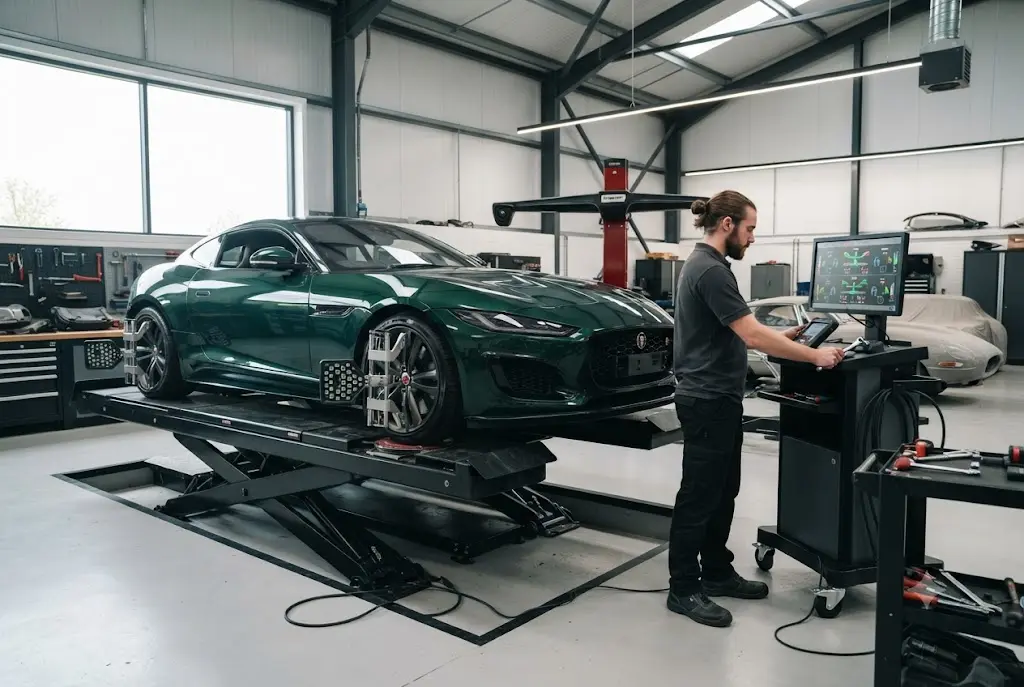
Wheel alignment is an important part of vehicle maintenance that can affect steering, handling, tyre wear and overall driving stability. When the wheels are not correctly aligned, a car may pull to one side, the steering wheel may sit off-centre or tyres may begin wearing unevenly. These problems can develop gradually, so drivers may not always notice them immediately.
UK motorists may encounter several terms for alignment work, including wheel tracking, steering alignment and specialist wheel alignment. Although the terminology can vary between garages, the underlying purpose is to ensure the vehicle’s wheels and steering geometry are positioned according to the manufacturer’s specifications.
Understanding when alignment is needed, how it differs from wheel balancing and what affects the price can help drivers avoid unnecessary tyre wear and identify handling problems earlier.
What Is Wheel Alignment?
Wheel alignment involves checking and, where necessary, adjusting the angles of the vehicle’s wheels so they meet the manufacturer’s specified geometry. These angles influence how the tyres contact the road and how the vehicle responds to steering inputs.
Alignment is generally concerned with settings such as camber, caster and toe, although the exact adjustments available depend on the vehicle’s suspension design.
The goal is not simply to make all four wheels point in exactly the same direction. The correct settings are determined by the vehicle manufacturer and its suspension geometry. A technician uses specialist equipment to measure the current settings and identify whether adjustments are required.
Why Wheel Alignment Matters
Correct alignment can contribute to predictable handling and more even tyre wear. When alignment angles move outside their intended specifications, the tyres may not contact the road in the way the manufacturer intended.
Depending on the severity and type of misalignment, drivers may notice:
- The vehicle pulling towards one side
- An off-centre steering wheel when driving straight
- Uneven or accelerated tyre wear
- Changes in steering response
- The vehicle feeling less stable
- Tyres showing wear on one edge
These symptoms do not always prove that alignment is the cause. Tyre pressure, suspension components, steering faults and damaged wheels can produce similar symptoms. A proper inspection is therefore more useful than adjusting the alignment based solely on how the car feels.
Wheel Alignment and Uneven Tyre Wear
One of the clearest reasons to investigate alignment is uneven tyre wear. If one part of a tyre is wearing substantially faster than another, the vehicle may have an alignment or suspension issue.
However, uneven wear can have several causes. Incorrect tyre pressure, worn suspension components, wheel imbalance, driving conditions and tyre age can all influence how a tyre wears.
If you notice unusual wear, check the tyres carefully and arrange an inspection if the pattern persists. Continuing to drive on badly worn tyres can compromise safety and may result in the need for premature replacement.
What Is Wheel Tracking?
Wheel tracking is a commonly used term for alignment work, particularly when discussing the adjustment of the toe angle. Some garages use “tracking” as a general term for alignment services, while others may use it more specifically.
This is why drivers should ask what the advertised service actually includes. A basic tracking adjustment may not be the same as a comprehensive four-wheel alignment check.
If a vehicle has adjustable alignment settings at both the front and rear, a comprehensive measurement may provide a more complete picture of the vehicle’s geometry. The correct approach depends on the vehicle and the symptoms being investigated.
Wheel Alignment vs Wheel Balancing
Wheel alignment and wheel balancing are different services, although garages may offer both during tyre-related work.
The Wheel alignment concerns the position and angles of the wheels relative to the vehicle and road. Wheel balancing concerns the distribution of weight around the wheel and tyre assembly.
An unbalanced wheel can contribute to vibration, particularly at certain speeds. Misalignment can contribute to steering or tyre-wear problems. A vehicle can therefore have a balancing problem, an alignment problem, both, or neither.
When a driver experiences steering vibration, pulling or unusual tyre wear, a technician should determine which issue is actually present rather than assuming that one service will solve every symptom.
Common Causes of Misalignment
Wheel alignment can change over time for several reasons. Normal use, road conditions and impacts can affect suspension and steering geometry.
Potholes and Road Impacts
Hitting a pothole or kerb can put significant force through a wheel, tyre, steering and suspension components. A substantial impact may alter alignment settings or damage a component.
Kerb Impacts
Even a relatively low-speed kerb impact can affect wheel or suspension geometry. If the steering suddenly feels different after such an incident, an inspection may be worthwhile.
Worn Suspension Components
Alignment adjustments cannot always compensate for worn or damaged components. Bushes, ball joints, track-rod components and other suspension or steering parts can affect wheel geometry.
If a technician discovers worn components, those issues may need to be repaired before a reliable alignment can be completed.
Suspension Modifications
Changes to ride height or suspension components can alter alignment geometry. Lowering a vehicle, replacing suspension components or making other modifications may therefore create a need for alignment checks.
When Should You Get a Wheel Alignment Check?
There is no single interval that applies to every vehicle. Unlike some routine maintenance items, alignment is often checked because of symptoms, tyre wear, repairs or an impact.
You may want to consider an alignment inspection if:
- Your car consistently pulls to one side
- The steering wheel is no longer centred
- You have hit a significant pothole or kerb
- New tyres show unusual wear
- Suspension or steering components have been replaced
- The vehicle’s handling feels different
- You have modified the suspension or ride height
- A technician identifies a possible geometry problem
It can also be sensible to check alignment when fitting new tyres if there are signs that the previous tyres suffered abnormal wear. Correcting the underlying issue can help protect the replacement tyres.
Specialist Wheel Alignment Equipment
Specialist wheel alignment normally uses dedicated measurement equipment to determine the vehicle’s current geometry. Modern systems can measure multiple alignment angles and compare the readings with the relevant vehicle specifications.
The quality of the result depends on more than simply having an alignment machine. The technician must set up the vehicle correctly, use the appropriate specifications and understand what the readings mean.
For some vehicles, a four-wheel alignment can be particularly useful because the relationship between front and rear wheel positions affects the vehicle’s overall geometry. However, the appropriate procedure depends on the manufacturer’s specifications and the design of the vehicle.
How Much Does Wheel Alignment Cost?
Alignment cost varies across the UK depending on the vehicle, garage, equipment, location and type of alignment service required. A simple tracking adjustment can cost less than a comprehensive four-wheel alignment.
Other factors can also affect the final price. If the technician discovers worn suspension or steering components, those parts may need repair before alignment can be completed properly.
Rather than choosing a garage based purely on the lowest advertised price, ask what the service includes. Useful questions include whether all relevant wheels will be measured, whether adjustments are included and whether the garage will provide before-and-after readings.
What Happens During a Wheel Alignment?
The exact procedure varies by vehicle and equipment, but a typical alignment process can involve several stages.
Initial Inspection
The technician may inspect tyres, wheels, steering and suspension components before taking alignment measurements. This helps identify problems that could prevent an accurate adjustment.
Vehicle Preparation
The vehicle is positioned on an appropriate alignment system. Tyre pressures and other relevant conditions may be checked before measurements are taken.
Measurement
Sensors or other alignment equipment measure the vehicle’s wheel geometry. The results are compared with the manufacturer’s specifications for the particular vehicle.
Adjustment
Where the vehicle design allows adjustment, the technician makes the necessary changes to bring the relevant settings within specification.
Final Check
Measurements can be taken again after adjustment to confirm the result. A professional garage should be able to explain what was found and what was changed.
Can Wheel Alignment Improve Tyre Life?
Correct alignment can help reduce abnormal tyre wear when misalignment is the cause of the problem. However, alignment is only one factor affecting tyre life.
Tyre pressure, driving style, road conditions, vehicle load, suspension condition and tyre quality can all influence wear. Keeping tyres correctly inflated and inspecting them regularly remains important even after an alignment adjustment.
If a tyre has already suffered significant uneven wear, correcting alignment will not restore the worn rubber. The tyre may still need replacement if its condition is unsafe or outside legal requirements.
Wheel Alignment After Suspension Repairs
Suspension and steering repairs can change the geometry of a vehicle. For this reason, an alignment check may be appropriate after certain components are replaced.
The need depends on which components were changed and the vehicle’s design. If a garage recommends alignment after a suspension repair, ask them to explain why the adjustment is required and which settings have been affected.
This is particularly important for vehicles with complex suspension systems or modifications. A technician should use the appropriate specifications rather than relying on generic settings.
Choosing a Garage for Wheel Alignment
Wheel alignment requires appropriate equipment and competent operation, so the workshop you choose matters.
When comparing garages, consider:
- Whether the workshop has suitable alignment equipment
- Whether technicians regularly perform alignment work
- Whether manufacturer specifications are used
- Whether the garage checks suspension and steering condition first
- Whether the quotation clearly explains what is included
- Whether before-and-after measurements are available
- Whether the garage can handle your vehicle type
National garage chains may offer convenient access to alignment services, while network-affiliated and independent garages can also provide specialist equipment. The important consideration is the capability of the specific workshop rather than the size of its brand.
Wheel Alignment and Modern Vehicles
Modern vehicles increasingly use sophisticated suspension, steering and driver-assistance systems. That can make correct wheel geometry even more important when carrying out repairs or replacing components.
Electric and hybrid vehicles also require the same attention to tyres, steering and suspension as conventional cars. Their different powertrains do not remove the need for accurate wheel geometry.
Drivers looking for broader maintenance information can also explore our guides to hybrid servicing and EV servicing, particularly when choosing a workshop for a newer electrified vehicle.
Questions to Ask Before Booking
Before agreeing to an alignment service, consider asking:
- Is this a two-wheel or four-wheel alignment?
- What exactly is included in the quoted price?
- Will the technician inspect suspension and steering first?
- Are manufacturer alignment specifications being used?
- Will the garage provide measurement results?
- Are adjustments included in the price?
- What happens if a worn component prevents alignment?
- Will I be contacted before additional repairs are carried out?
These questions can help you understand whether you are paying for a basic tracking adjustment or a more comprehensive alignment service.
Can You Drive With Poor Wheel Alignment?
A vehicle with an alignment problem may still be driveable, but continuing to use it without investigating the cause can allow tyre wear and handling issues to worsen.
If the car pulls strongly to one side, the steering behaves unpredictably or a tyre has serious damage or abnormal wear, it is sensible to have the vehicle inspected promptly. A wheel alignment issue can sometimes indicate a damaged steering or suspension component rather than being an isolated geometry problem.
Drivers should also remember that correct alignment does not compensate for unsafe tyres or damaged suspension. Those issues need to be addressed separately.
Final Thoughts on Wheel Alignment
Wheel alignment is a relatively straightforward maintenance service, but it can have an important effect on steering behaviour, tyre wear and vehicle stability. Symptoms such as pulling, an off-centre steering wheel or uneven tyre wear should not automatically be ignored as normal wear and tear.
When alignment is required, choose a workshop with suitable equipment, trained technicians and access to the correct vehicle specifications. Ask what the service includes and whether suspension or steering components will be checked before adjustments are made.
Whether you use a national chain, garage network or independent specialist, the objective should be the same: accurate measurements, appropriate adjustments and a clear explanation of the work carried out. That approach can help protect your tyres and keep your vehicle handling as intended.
