

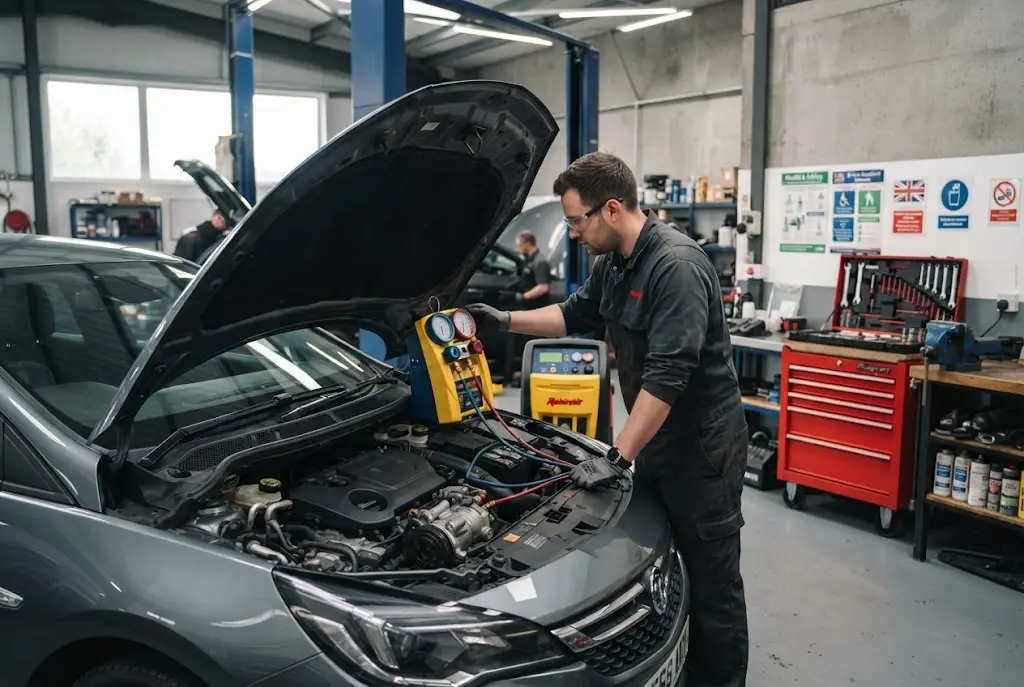
Car air conditioning repair becomes necessary when your vehicle’s AC stops cooling properly, produces unusual smells or noises, or fails to operate at all. While low refrigerant can sometimes be responsible, poor cooling may also result from leaks, compressor faults, electrical problems, damaged components or restricted airflow. Identifying the actual cause is important because a simple regas will not fix every air-conditioning problem.
Modern vehicles rely on their air-conditioning systems for more than keeping the cabin cool. The system can help control humidity and clear condensation from the windows, making it useful throughout the year. This guide explains common air-conditioning faults, what a professional repair involves, typical cost considerations and how to decide whether you need a regas, diagnosis or more extensive repair.
What Is Car Air Conditioning Repair?
Car air conditioning repair involves diagnosing and fixing a fault affecting the vehicle’s air-conditioning system. The work can range from replacing a damaged component or repairing a refrigerant leak to addressing electrical faults or problems with the compressor.
This is different from routine servicing. An air-conditioning service may involve checking the system and servicing the refrigerant, whereas repair work is required when a specific fault has been identified.
For example, if a vehicle gradually becomes less effective at cooling, the system may need inspection to determine whether refrigerant has been lost. If refrigerant repeatedly disappears, however, the underlying leak may need to be located and repaired before the system is recharged.
Common Signs You Need Car Air Conditioning Repair
Air-conditioning faults can develop gradually or appear suddenly. Some of the most common warning signs include:
- Warm air coming from the vents when the AC is switched on.
- The system takes unusually long to cool the cabin.
- Cooling performance changes from one journey to another.
- The air-conditioning stops working completely.
- Unusual clicking, rattling or grinding sounds occur when the AC operates.
- A strong or musty smell comes from the vents.
- The windows do not demist as effectively as expected.
- The system works intermittently.
- Visible signs of damage or leakage are found around AC components.
These symptoms do not necessarily point to one specific component. Proper diagnosis is therefore preferable to replacing parts based on symptoms alone.
Why Is My Car AC Not Blowing Cold Air?
There are several possible reasons why a car air conditioner may stop producing cold air. The most appropriate repair depends on the cause.
Low Refrigerant
Refrigerant is essential to the cooling process. If the system contains too little refrigerant, cooling performance can decline. A professional may recommend an AC regas after checking the system and following the appropriate service procedure.
However, low refrigerant can sometimes indicate that the system has a leak. Simply adding refrigerant without investigating recurring loss may only provide temporary improvement.
Refrigerant Leak
Leaks can occur through hoses, seals, connections or other components. A vehicle that repeatedly needs recharging should be assessed for a possible leak rather than continually treated with a refill.
Compressor Fault
The compressor circulates refrigerant through the air-conditioning system. Mechanical or electrical problems affecting the compressor can lead to poor cooling or complete system failure.
Condenser Problems
The condenser releases heat from the refrigerant. Damage, blockage or corrosion can affect its ability to perform this function and may result in reduced cooling.
Electrical Faults
Modern climate-control systems contain sensors, switches, wiring, control modules and other electrical components. A failed sensor or electrical connection can prevent the system from operating correctly even when the refrigerant level is adequate.
Airflow Problems
A restriction in the ventilation system can reduce the amount of conditioned air reaching the cabin. A blocked cabin filter can also affect airflow and contribute to poor ventilation performance.
Car Air Conditioning Repair vs AC Regas
One of the most important distinctions for drivers is the difference between a repair and an AC regas.
A regas involves recovering the existing refrigerant, carrying out the relevant checks and recharging the system with the correct refrigerant according to the vehicle’s requirements. It is generally considered a maintenance or refrigerant-service procedure.
Repair is broader. If the vehicle has a leaking hose, damaged condenser, failed compressor, faulty electrical component or another defective part, the underlying problem needs to be addressed.
Therefore, a car that is not cooling properly should not automatically be assumed to need only a regas. A professional assessment can help establish whether the problem is related to refrigerant level or another component.
What Does Vehicle Air Conditioning Repair Involve?
The exact process depends on the symptoms and vehicle. A technician may begin by discussing the problem with the driver and checking the air-conditioning controls and cooling performance.
Further diagnostic work can include checking system pressures, inspecting components and connections, looking for signs of refrigerant leakage and testing relevant electrical components. If a fault is identified, the technician can explain which component requires attention.
Some repairs may be relatively straightforward, while others require specialist equipment, replacement parts and additional labour. For that reason, it is difficult to give one fixed price for vehicle air conditioning repair.
How Much Does Car Air Conditioner Repair Cost?
The car air conditioner repair cost varies according to the vehicle, fault, refrigerant type, parts required and labour rate. A basic refrigerant service can cost considerably less than replacing a major component such as a compressor or condenser.
As a general UK reference, RAC guidance currently places air-con regas pricing at around £50 to £200, while noting that prices vary between vehicles and providers. More substantial air-conditioning repairs can cost significantly more depending on the component and work involved.
When comparing repair quotes, ask whether the price covers diagnosis, labour, replacement parts, refrigerant and any additional leak testing. A low advertised price may only cover a basic regas rather than a complete diagnostic and repair service.
What Affects Car AC Repair Cost?
Several factors can influence the final price of car AC repair:
- Fault type: A minor issue can be much less expensive than a major component failure.
- Vehicle model: Different vehicles use different system designs and components.
- Refrigerant type: The required refrigerant and quantity can affect service costs.
- Replacement parts: Genuine, aftermarket and specialist components can have different prices.
- Labour: Labour rates vary between garages and regions.
- Diagnostic requirements: Complex intermittent faults may require additional testing.
Can You Find Car AC Repair Near Me?
When searching online for car AC repair near me, consider more than distance and headline price. Look for a garage or specialist that clearly describes its air-conditioning services and has the equipment required for the refrigerant system used by your vehicle.
It is also sensible to ask whether the provider can diagnose leaks and mechanical or electrical faults if the vehicle is not simply suffering from low refrigerant. This can prevent repeated visits for the same unresolved problem.
Some businesses offer mobile air-conditioning services. A mobile car air conditioning recharge may be convenient for a vehicle that only requires appropriate refrigerant servicing, but mobile availability and the type of repairs that can be completed on-site vary between providers.
Climate Control Repair in Modern Cars
Many newer vehicles use automatic climate control rather than a basic manual air-conditioning system. These systems can automatically regulate cabin temperature using sensors, control units, fans and air distribution mechanisms.
As a result, climate control repair may involve electrical diagnostics as well as conventional air-conditioning checks. A problem with a temperature sensor, control panel, actuator or wiring can sometimes produce symptoms that appear similar to a refrigerant or compressor problem.
For this reason, modern climate-control faults are best approached systematically. Testing the relevant components can help prevent unnecessary replacement of otherwise functional parts.
Can Air Conditioning Problems Be Electrical?
Yes. Vehicle air conditioning relies on electrical components as well as mechanical and refrigerant systems. Depending on the vehicle, electrical faults can affect switches, sensors, fans, compressor controls and climate-control modules.
If the AC problem appears alongside other electrical symptoms, such as unusual warning lights, charging issues or accessories behaving unexpectedly, broader auto electrical services may be relevant. Electrical diagnostics can help determine whether the air-conditioning fault is part of a wider vehicle electrical problem.
When Is an Air Conditioning Service Enough?
An air-conditioning service may be appropriate when the system is functioning but cooling performance has gradually declined and there are no obvious signs of a significant mechanical or electrical fault.
However, persistent problems require a different approach. If the vehicle loses refrigerant repeatedly, makes unusual noises or stops cooling shortly after servicing, ask the technician to investigate the underlying cause.
This is especially important because repeatedly recharging a system without addressing a leak does not resolve the source of the problem.
How to Reduce the Risk of AC Problems
Although not every air-conditioning fault can be prevented, regular attention can help identify problems earlier.
- Use the air conditioning periodically throughout the year.
- Follow the manufacturer’s maintenance recommendations.
- Replace the cabin filter when required.
- Pay attention to unusual smells or sounds.
- Do not ignore declining cooling performance.
- Have recurring refrigerant loss investigated.
- Use a qualified professional for refrigerant-related work.
Air conditioning should also be considered as part of wider vehicle maintenance. Drivers dealing with starting or charging problems may need auto battery service, while broader electrical symptoms may require electrical diagnostics. Keeping these maintenance areas separate helps ensure that the correct fault is investigated.
When Should You Book Car Air Conditioning Repair?
You should consider professional car air conditioning repair when the system stops cooling, produces unusual noises or smells, operates inconsistently or repeatedly loses refrigerant. Early diagnosis can sometimes prevent a minor problem from developing into a more complicated repair.
If the system is still working but noticeably weaker than before, an inspection can determine whether it needs routine servicing or whether there is an underlying fault. If it has stopped working completely, diagnosis is usually more appropriate than assuming a simple regas will solve the issue.
Final Thoughts
Effective car air conditioning repair starts with finding the reason the system is not performing correctly. Low refrigerant is one possibility, but leaks, compressor problems, condenser damage, airflow restrictions and electrical faults can all affect vehicle air conditioning.
Understanding the difference between an AC regas, routine service and genuine repair can help UK drivers make more informed maintenance decisions. Rather than choosing a service based only on the lowest advertised price, ask what checks are included and whether the provider can diagnose the underlying fault.
With regular maintenance and prompt attention to unusual symptoms, your vehicle’s air-conditioning system can remain a useful part of year-round cabin comfort and demisting performance.
