

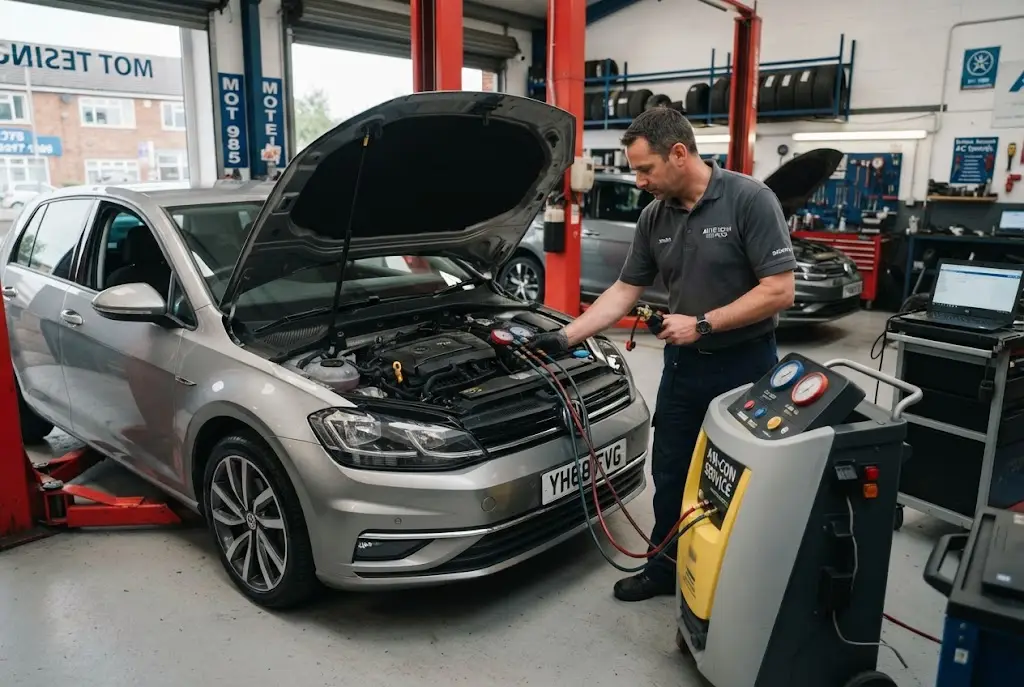
An auto air conditioning service can help keep your vehicle comfortable, improve demisting performance and identify problems before they become more expensive. Car air conditioning is more than simply a system that blows cold air. It relies on refrigerant, compressors, condensers, evaporators, fans, filters and electrical controls working together. When one part stops performing properly, the system may become less effective or stop cooling altogether.
For UK drivers, understanding the difference between routine servicing, an air-con regas and a full repair can make it easier to choose the right type of professional help. This guide explains how vehicle air conditioning works, what an auto air conditioning service usually involves, common warning signs, expected costs and practical maintenance tips.
What Is an Auto Air Conditioning Service?
An auto air conditioning service is a professional inspection and maintenance procedure designed to check the condition and performance of a vehicle’s cooling system. Depending on the garage and the condition of the vehicle, the service may include inspecting the system, recovering and replacing refrigerant, checking for leaks, carrying out a vacuum test and testing the temperature and operation of the air conditioning.
It is important to understand that an air-con service is not automatically the same as a repair. If the system has a failed compressor, electrical fault, damaged condenser or refrigerant leak, further diagnostic work may be necessary.
RAC guidance explains that a typical air-con regas involves inspection, refrigerant recovery, vacuum testing, recharging and a performance check. The exact checks can vary between garages, so drivers should confirm what is included before booking. RAC’s air-con regas guidance provides further information about the process.
How Does Car Air Conditioning Work?
Although modern climate control systems can look complicated, the basic principle is straightforward. Refrigerant circulates through the air conditioning system and changes between different states as pressure and temperature change. This allows heat to be absorbed from the cabin and released outside the vehicle.
The compressor plays a central role by circulating refrigerant through the system. The condenser then helps release heat, while the expansion device reduces refrigerant pressure before it reaches the evaporator. Inside the cabin, air passes over the evaporator, allowing heat to be removed before cooler air is directed through the vents.
The system also depends on electrical controls, sensors, fans and airflow components. That is why a problem that appears to be an air-conditioning issue can sometimes involve the vehicle’s electrical system rather than refrigerant alone.
What Does an Auto Air Conditioning Service Include?
The exact procedure varies between service providers, but a professional auto air conditioning service may include several important checks.
System Inspection
The technician can inspect visible components, hoses, connections and other parts of the air conditioning system for signs of damage, contamination or leakage.
Refrigerant Recovery
If the vehicle requires a regas, existing refrigerant is recovered using appropriate equipment rather than simply adding more refrigerant without checking the system.
Leak and Vacuum Testing
A vacuum test can help identify whether the system is capable of holding the required vacuum. If there is evidence of a leak, simply recharging the system may not be an adequate solution.
Recharging the System
Once the system has been assessed and the appropriate procedure has been completed, the correct refrigerant can be added according to the vehicle manufacturer’s requirements.
Performance Testing
The technician can then check whether the air conditioning is producing the expected cooling performance and whether the system is operating correctly.
Different vehicles use different refrigerants and system specifications. UK government guidance identifies R12, R134a and HFO-1234yf among refrigerants found in vehicle air conditioning systems and notes that different refrigerants must not be mixed. Professional equipment and appropriate procedures are therefore important. UK government guidance on vehicle air-conditioning refrigerants explains these requirements.
When Does Your Car Need an Auto Air Conditioning Service?
Many drivers only think about their air conditioning when it stops producing cold air. However, several smaller changes can indicate that the system needs attention.
- The air is noticeably warmer than it used to be.
- The system takes longer to cool the cabin.
- There is little difference between the lowest and highest cooling settings.
- A musty or unpleasant smell comes from the vents.
- The windows take longer to demist.
- Unusual noises appear when the air conditioning is switched on.
- The system works intermittently.
- The air conditioning stops operating completely.
Reduced cooling does not always mean that the vehicle simply needs more refrigerant. A leak, compressor problem, blocked component, electrical fault or airflow issue can produce similar symptoms. Proper diagnosis is therefore important when the problem continues after basic servicing.
Auto AC Service vs Air Conditioning Repair
An auto AC service generally focuses on maintenance, inspection and refrigerant-related servicing. An air conditioning repair is different because it involves identifying and fixing a specific fault.
For example, a vehicle that has gradually become less effective may need a regas if the refrigerant level has fallen within the normal service context. On the other hand, a system that repeatedly loses refrigerant may have a leak that requires investigation and repair.
This distinction is useful because paying for repeated regassing without investigating an underlying fault can leave the original problem unresolved. If the air conditioning has a significant mechanical or electrical fault, a specialist may recommend diagnostic testing before carrying out further work.
How Much Does Auto Air Conditioning Service Cost?
The auto AC service cost depends on the vehicle, refrigerant type, location, garage and work required. A straightforward regas is normally less expensive than diagnosing and repairing a failed compressor, leak or electrical component.
RAC’s current UK guidance gives a general air-con regas range of approximately £50 to £200, while noting that pricing varies according to the vehicle and provider. Its guidance also indicates that more substantial repairs can cost considerably more. These figures should therefore be treated as general reference points rather than a fixed national price.
When comparing air conditioning service prices, check what is actually included. One garage may advertise a basic regas while another may include additional inspection or diagnostic checks. Asking for a clear breakdown can make price comparisons more meaningful.
What Affects Car Air Conditioning Service Cost?
Several factors can influence the final car air conditioning service cost:
- Vehicle type: Different vehicles have different system designs and refrigerant requirements.
- Refrigerant: The type and quantity required can affect the price.
- System condition: A healthy system may only require routine servicing, while a faulty system may need diagnosis and repair.
- Garage location: Labour rates can vary considerably across different parts of the UK.
- Parts required: Component replacement can significantly increase the overall cost.
- Diagnostic work: Complex faults may require additional testing before repairs begin.
Can You Find Auto Air Conditioning Service Near Me?
When searching for auto air conditioning service near me, avoid choosing a provider based only on the cheapest advertised price. Look for a garage or specialist that clearly explains what its service includes and has suitable equipment for the refrigerant used by your vehicle.
It is also worth asking whether the provider can investigate leaks and other faults if the system is not cooling correctly. This can be particularly important when the same problem returns shortly after a regas.
For drivers who prefer convenience, some providers also offer mobile vehicle air conditioning services. Availability varies by location and by the type of work required, so confirm whether the provider can perform the specific service at your chosen location.
Why Regular Car Air Conditioning Service Matters
Regular attention can help identify declining performance before the system develops a larger fault. Properly functioning air conditioning can also help with cabin comfort and window demisting, which is useful throughout the year rather than only during warm weather.
RAC notes that manufacturers commonly recommend servicing car air conditioning roughly every two years, although the appropriate interval can vary by vehicle and usage. It also recommends using the system throughout the year and keeping the cabin filter maintained.
Using the air conditioning periodically can also make it easier to notice changes in cooling performance, unusual sounds or unpleasant smells before they become major problems.
Common Auto Air Conditioning Problems
Several issues can affect vehicle air conditioning. Low refrigerant is one possibility, but it is not the only explanation.
Low Refrigerant
A reduction in refrigerant can cause weaker cooling. If the system has lost refrigerant because of a leak, simply replacing it may not provide a lasting solution.
Refrigerant Leak
A leak can occur through damaged components, seals or connections. Recurring loss of refrigerant should be investigated rather than treated as a routine refill.
Compressor Problems
The compressor is a major component of the system. Mechanical failure can result in poor or absent cooling and may require specialist repair.
Electrical or Control Faults
Modern climate-control systems use sensors, switches, control modules and other electrical components. A fault in one of these areas can prevent the system from operating correctly.
Airflow and Cabin Filter Issues
A blocked or dirty cabin filter can restrict airflow and contribute to poor cabin comfort. Unpleasant smells can also develop when the ventilation system requires cleaning or maintenance.
How to Maintain Your Car Air Conditioning
There are several simple habits that can help you monitor the condition of your vehicle’s air conditioning.
- Use the air conditioning periodically throughout the year.
- Pay attention to changes in cooling performance.
- Replace the cabin filter according to the vehicle manufacturer’s recommendations.
- Do not ignore unusual smells or noises.
- Have recurring refrigerant loss investigated.
- Use a qualified professional when the system needs refrigerant handling or specialist repair.
If your vehicle develops broader electrical symptoms alongside air-conditioning problems, the issue may require electrical diagnostics rather than an air-con service alone. Similarly, battery or charging problems can affect electrical systems throughout a vehicle, making proper diagnosis more useful than replacing parts based on symptoms alone.
When Should You Book an Auto Air Conditioning Service?
There is no need to wait for the system to fail completely before seeking professional attention. If the air is becoming warmer, the system smells unusual, windows are taking longer to demist or the cooling performance is inconsistent, an inspection can help identify the cause.
An auto air conditioning service is particularly useful when you want to distinguish normal maintenance from a problem that requires repair. A reputable provider should be able to explain what the vehicle needs and whether additional diagnostic work is necessary.
Final Thoughts
Car air conditioning is an important part of modern vehicle comfort and ventilation, but it should not be treated as a simple refrigerant refill. An effective auto air conditioning service can involve inspection, refrigerant recovery, leak or vacuum testing, recharging and performance checks, depending on the vehicle and service provider.
Understanding the difference between servicing and repair can also help UK drivers avoid unnecessary spending. If the system gradually loses cooling performance, a professional assessment can determine whether it needs routine attention or whether an underlying mechanical, electrical or refrigerant problem needs to be addressed.
As part of a wider vehicle maintenance routine, air conditioning should be considered alongside transmission, electrical and battery systems. Keeping these areas properly maintained can make it easier to identify problems early and keep your vehicle operating reliably throughout the year.
